How Novartis R&D is advancing the next breakthrough innovations

Novartis R&D leaders discuss how Novartis science, technology and strategy are shaping the next decade of innovation

Jul 24, 2026

Novartis is moving earlier, thinking differently, and making deliberate scientific choices to tackle some of medicine’s most complex challenges, with the goal of delivering transformative therapies that extend and improve patients' lives.

Leaders from across Biomedical Research and Development, focusing on the Oncology, Neuroscience, Immunology, and Cardiovascular, Renal and Metabolic Therapeutic Areas, discussed how Novartis science, technology and strategy are shaping the next decade of innovation. Highlights below.

How are we enabling breakthrough innovation at Novartis?

Fiona Marshall, President of Biomedical Research, and Shreeram Aradhye, President of Development and Chief Medical Officer, spoke on the importance of understanding patient needs, the company’s technological leadership, and the process of building an engine of innovation at scale.
What's guiding Novartis innovation?

“It always starts with patients. What are the biggest unmet patient needs, particularly in disease areas where we have already established ourselves and where we have a deep understanding of that patient community? 

Then we go to the next level, which is understanding the basics of the disease. We're looking at causal biology—what's really driving that disease, and how can we target those causal pathways to bring long-term benefits to patients? Our platform technologies provide us with a range of tools to address diverse biological challenges. I think that puts us in a great position going forward.”

- Fiona Marshall, Ph.D.

How are we developing medicines at scale?

Shreeram Aradhye, M.D., speaking on Novartis R&D strategy at a recent media briefing.

What therapies are the new frontiers in cancer care?

More patients than ever are benefiting from existing cancer therapies, but cancer is complex. Disease progression can be rapid, and resistance to treatment remains a significant challenge. Novartis has long been a pioneer in advancing new treatment modalities, from cell therapy to targeted therapies such as radioligand therapy, and our R&D is advancing innovation to help define the future of cancer care.

Shiva Malek, Global Head of Oncology, Biomedical Research, and Mark Rutstein, Global Head of Oncology Development, talked about how our platform leadership and multi-modality approach are advancing a diverse pipeline that could help deliver the right treatment for the right biology at the right point in the cancer treatment journey.

How Novartis is building on our pioneering work in cell therapy:

“The cell therapy platform is a place that we had pioneered. This is a rapidly evolving field and there are two main areas that are a focus. One is understanding T cell biology, immune biology, and how we can generate cell therapies, or CAR-Ts, that are even more effective. We could do this by making them more stem-like, making them more persistent, and seeing more activity even in more immunosuppressive settings like the solid tumor setting.

The second part of innovation in the cell therapy space focuses on the manufacturing front. This is a very rapidly evolving landscape, from improvements in the design of CAR-Ts themselves to in vivo CAR-T. We are exploring this in our T-charge platform. This platform enables us to develop more stem-like T cells—so better, fitter T cells—which we think could drive longer-term durability of response and more persistent T cells for patients. And then this platform also enables faster manufacturing time.”

- Shiva Malek, Ph.D.

How our multi-modality approach is being applied in prostate cancer:

“A critical pillar for us in prostate cancer, in addition to developing innovative isotopes, is to look for novel combinations with our radioligand therapy platform.

One of those opportunities is with an androgen receptor degrader which, when administered, has antitumor effect in its own right, but also is a nice potential combinatorial partner for our RLT. We also have an agent that is a DNA damage repair inhibitor, and we are advancing a small molecule with an epigenetic mechanism of action that may offer additional therapeutic benefits in prostate cancer.

Based on the breadth of this pipeline, spanning different modalities, our goal is to deliver meaningful clinical benefits and extensions in survival for patients with prostate cancer.”

- Mark Rutstein, M.D.

Why are we optimistic about Neuroscience R&D?

Neuroscience is experiencing a pivotal moment. After decades of limited progress, advances in biological understanding and therapeutic technologies are creating the potential to meaningfully alter the course of neurological disease.

Bob Baloh, Global Head of Neuroscience, Biomedical Research, and Nazem Atassi, Global Head of the Neuroscience and Gene Therapies Development, shared reasons for hope in neuroscience in light of emerging advances:

“As a neurologist, I became very familiar with the unmet need in these diseases. But I don't think you need to be a neurologist to appreciate what’s at stake. Nearly everyone has been touched directly or indirectly by neurologic diseases—Alzheimer's, Parkinson's, others—that have limited treatment options. They’re devastating to the patient; they’re devastating to the families.

The reason for optimism is the convergence of several factors, the first being biological understanding. The knowledge we have from genetics, from analyzing human tissue, has put us in a place where we understand better what are the key things that we need to alter in those diseases. Second, we now have therapeutic modalities that can hit those genetically defined targets that in many cases are behind the blood brain barrier or in neuromuscular tissue. And then the last is clinical developability, with improving biomarkers to measure interventions faster and earlier.”

- Bob Baloh, M.D., Ph.D.

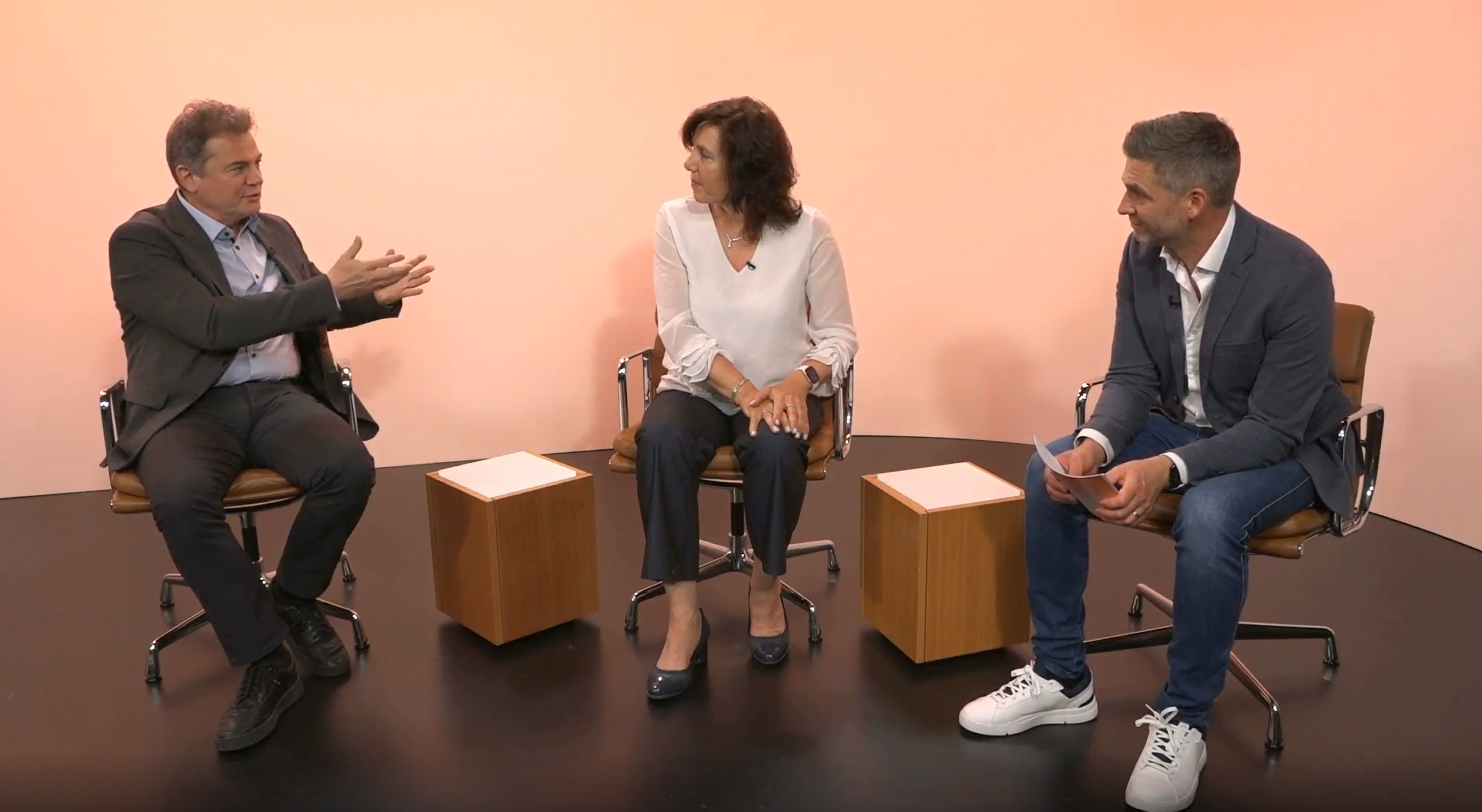
Nazem Atassi, M.D., M.B.A. (far left) and Bob Baloh, M.D., Ph.D. (middle), in conversation with Max Lawson, Head of Process Innovation at Novartis.

What new treatments are being pursued for those living with autoimmune and immune-mediated diseases?

Advances in immune modulation are opening the door to fundamentally new approaches to treating disease. From longstanding areas of therapeutic leadership in immune-mediated diseases to new frontiers such as Sjögren's disease, Novartis is leveraging its R&D expertise to advance bold science and build a diverse, industry-leading pipeline with the goal of bringing relief and a renewed sense of hope to people living with autoimmune and immune-mediated conditions.

Peter Gergely (left) and Angelika Jahreis (center) in conversation with Max Lawson of Novartis. The group discussed technological advances that are opening the door to new approaches to treating immune-mediated diseases.
Peter Gergely, M.D., Ph.D. (left) and Angelika Jahreis, M.D., Ph.D. (center) share their perspectives with Max Lawson during a panel on Immunology R&D.

Angelika Jahreis, Global Head, Immunology Development, and Peter Gergely, Global Head of Translational Medicine, Immunology, talked about the opportunities ahead as Novartis builds on its legacy of success across Rheumatology, Dermatology and Allergy to shape what’s next in Immunology.

What scientific and technological advances are enabling the next wave of therapies?

“As a dermatologist, and I'm sure for Peter as well as a rheumatologist, when we started out in academia, our treatment choices were limited to broadly immunosuppressive therapies. Now very exciting things have happened. We have made broad steps forward to understanding disease pathology and to understanding the immune system in general. We now have targeted therapies for patients which allow us to treat the root cause of some of these diseases. We still have a lot to do, but we are optimistic that continued advances will enable us to develop more targeted and effective treatments for patients.”

- Angelika Jahreis, M.D., Ph.D.

Why is it important to understand the underlying drivers of disease?

“So many immune-mediated diseases have common or related pathways, and by targeting the underlying driver of many diseases through a shared mechanism, we can run clinical studies in multiple indications in parallel. Together with Angelika's group, we can thus streamline and accelerate the development process.
At the same time, some immune-mediated diseases are more complex and require different approaches, so we're also exploring multiple therapeutic approaches to personalized care for these patients.”

- Peter Gergely, M.D., Ph.D.

How prevention is fueling future innovation in cardiovascular disease

Millions of people experience cardiovascular (CV) events every year. At Novartis, our ambition is to enable earlier intervention to help reduce the risk of heart attacks and strokes.

Shaun Coughlin, Global Head, Cardiovascular and Metabolism, Biomedical Research, and Ruchira Glaser, Global Head of Cardiovascular, Renal, and Metabolic Development, shared our prevention led cardiovascular strategy, which is focused on first-in-class science, early intervention and durable therapies designed to reduce long-term risk and improve outcomes.

On our prevention-first approach in atherosclerotic cardiovascular disease (ASCVD):

“About 10% of first heart attacks and first strokes are fatal, and survivors are often left with heart failure or permanent deficits. This speaks to the need for prevention, and we have some new ideas about how to go about that.

We're focused on addressing the causal risk drivers of atherosclerosis with semi-annual or annually delivered medicines designed to decrease risk and prevent disease. We recognize the challenges of preventing ASCVD at scale, but we're very excited about the potential of our long-acting medicines to establish a new paradigm, improve adherence, and contribute to a meaningful extension of healthy lifespan.”

- Shaun Coughlin, M.D., Ph.D.

On the convergence of our science and mission in cardiovascular disease:

“Here at Novartis, I'm excited because we're on a mission to ensure that no heart is lost too soon and to build a world where preventable heart disease and cardiovascular deaths are no longer part of our everyday reality. And actually, perhaps now the science is genuinely ready to deliver a step change for patients.

Ultimately, our job is to turn this strong biology that we talked about today and the powerful platforms that we shared into durable and meaningful outcomes for patients, and I think we do this through decisive development and an unwavering focus, because I really believe that behind every single one of the data points we've talked about is a person, their family, and their future. And if we get this right, we give people more of those moments that make life worth living.” 

- Ruchira Glaser, M.D., M.S.