Why does global health need new models?

Global health is changing. Legacy systems based on international donors and philanthropic funding, focused on infectious diseases, are no longer enough in a world with a growing burden of chronic conditions such as cancer and heart disease.

At Novartis, we believe patients in low- and middle-income countries deserve access to the latest therapies, creating economic prosperity and resilience.

We go beyond breakthroughs to forge sustainable partnerships that increase the availability of innovative treatments, speed up diagnostics and referrals, and extend the reach of innovation into communities facing barriers to healthcare.

Our ambition is to do this through business models that are as innovative as our science, combining the strengths of the public, private, and non-profit sectors to build sustainable partnerships. We are working with partners to:

  • build Community Health Initiatives to increase access for communities that face barriers to healthcare;
  • provide medicines and close access gaps in countries where Novartis has no or limited presence through distributors and partnerships with multinational and non-governmental organizations; and
  • introduce Emerging Market Brands, innovative medicine brands specifically designed for low- and middle-income countries.

Novartis Community Health Initiatives

For communities facing barriers to healthcare, we work with local partners to deliver Community Health Initiatives (CHIs). These programs aim to improve health outcomes for communities beyond the reach of conventional commercial models, by addressing healthcare system barriers and expanding access to quality care and treatment.
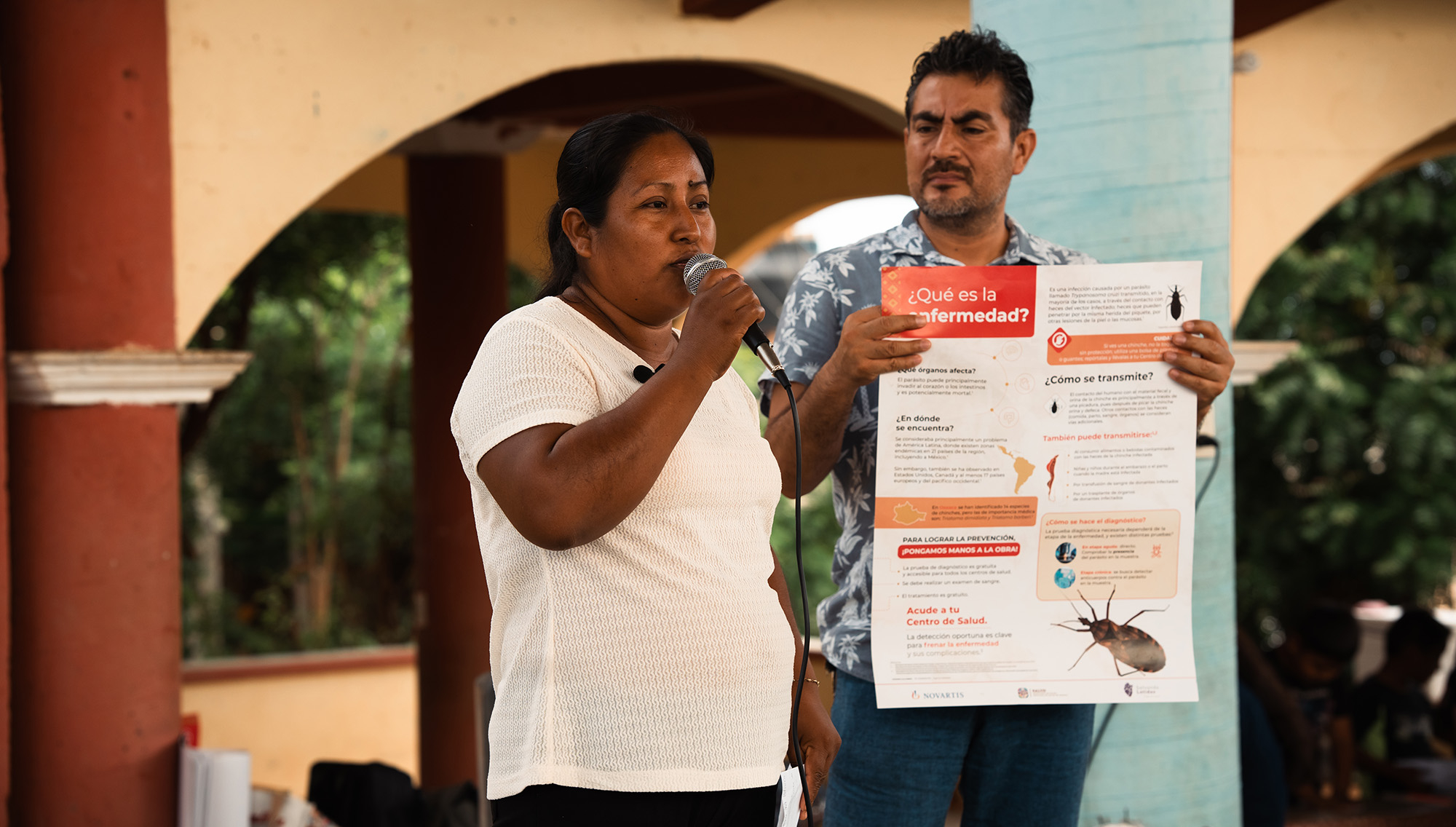
Two people standing while one speaks into a microphone and the other holds an informational poster.

This includes training community health workers with digital tools to improve diagnosis and support data-driven decision-making, and finding new ways to bring care to remote communities, for example through telemedicine solutions. Our first CHIs started in Vietnam, Rwanda, and Bolivia, and have demonstrated significant improvements in clinical outcomes. We aim to expand to at least 10 emerging markets by 2030.

Case study: Reaching hidden hotspots of chronic diseases

Reaching communities that are many hours from hospitals and clinics, or that face barriers to healthcare in urban settings, often requires new approaches to care.

Through a combination of technology and partnership, our Community Health Initiatives in Vietnam and Rwanda have screened hundreds of thousands of people at the community level for cardiovascular risk. This has led to a significant reduction in blood pressure and has connected tens of thousands of patients to care before their conditions became more severe.

In Bolivia, our program uses telemedicine to improve access to care for indigenous communities who experience high rates of serious cardiovascular complications linked to Chagas disease, a parasitic infection endemic in the region. In its first 18 months, the program screened 10 000 people, with approximately one in six being diagnosed with a heart condition and starting treatment.

Closing gaps beyond commercial markets

In hard-to-reach areas where Novartis has no or limited presence, we supply treatments to multilateral and international non-governmental organizations, such as the Global Fund, on a sustainable ‘no profit, no loss’ basis, or harness a multi-country distributor hub. We are also exploring new voluntary licensing models, contributing the first on-patent cancer treatment to the Access to Oncology Medicines Coalition.

We also provide medicines to groups including the World Health Organization (WHO), the Global Drug Facility, The Max Foundation and Direct Relief. These span diseases such as leprosy, parasitic worm infections, drug-resistant tuberculosis, certain cancers, and rare renal disease.

Through our Next Generation Scientist (NGS) Program and partnerships with the University of Basel, University of Siena, University of Global Health Equity in Rwanda and the Open Medical Institute, we also provide training and mentorship for a new generation of scientists and clinicians from low- and middle-income countries. As of 2026, NGS has trained more than 180 scientists and clinicians from developing and emerging economies since it began in 2011.

WHO Box out: Reducing the burden of life-changing disease

96% reduction in global leprosy cases since the 1980s,1 with more than 77 million Novartis treatments distributed via WHO without profit, reaching 8.3 million people.

Novartis Emerging Market Brands

Novartis established Emerging Market Brands (EMBs) in 2014 to address affordability challenges and speed up access to innovative therapies in low- and middle-income countries.  We systematically assess the feasibility of EMBs for all new product launches.

As of September 2026, we have launched 250 EMBs in more than 64 countries – from Nigeria and Kenya to India, Brazil, and Vietnam. These innovative therapies cover conditions such as cardiovascular disease, breast and prostate cancers, and neurological conditions. Our strategy aims to ensure that our treatments remain affordable within a sustainable business model.

References:

  1. Smith CS, Aerts A, Saunderson P, et al. Multidrug therapy for leprosy: a game changer on the path to elimination. Lancet Infect Dis 2017;17:e293–7. https://doi.org/10.1016/S1473-3099(17)30418-8