
The pharmaceutical industry is constantly evolving, especially in the field of biological medicines, which have radically transformed the treatment of the most severe diseases. Our colleagues contribute to accelerating decisions and processes so that medicines reach patients faster. One of them is Dr. Goran Miličić, Senior Researcher in Science and Technology from the Technical Research and Development department, who received the global Novartis VIVA award for outstanding achievements in research and development for his expertise in combining experimental knowledge with computational modelling.
Dr. Miličić began his journey at Novartis as an expert in early formulation development. Today, he combines an understanding of protein structure, molecular dynamics, and early development of innovative biological medicines. “What inspired me about this profession is the combination of fundamental science and its direct impact on drug research and development, enabling disease treatment. I’m especially motivated when I see that our solutions have both scientific and clinical value,” he explains.
Faster drug development through molecular modelling
The main advantage of biological medicines is their ability to target specific sites, leaving other tissues unaffected and resulting in fewer side effects. Their rapid development, according to Dr. Miličić, is primarily enabled by improved understanding of structural and cellular biology, supported by computational modelling. Drug development is a long and complex process. “When a candidate molecule enters development, we aim to ensure it is active, stable, and safe before moving into clinical trials. The entire process takes eight to ten years, and only about ten percent of molecules successfully pass all testing phases,” he says. The high attrition rate is due to our still incomplete understanding of human biology—molecules that initially seem promising often fail in testing.
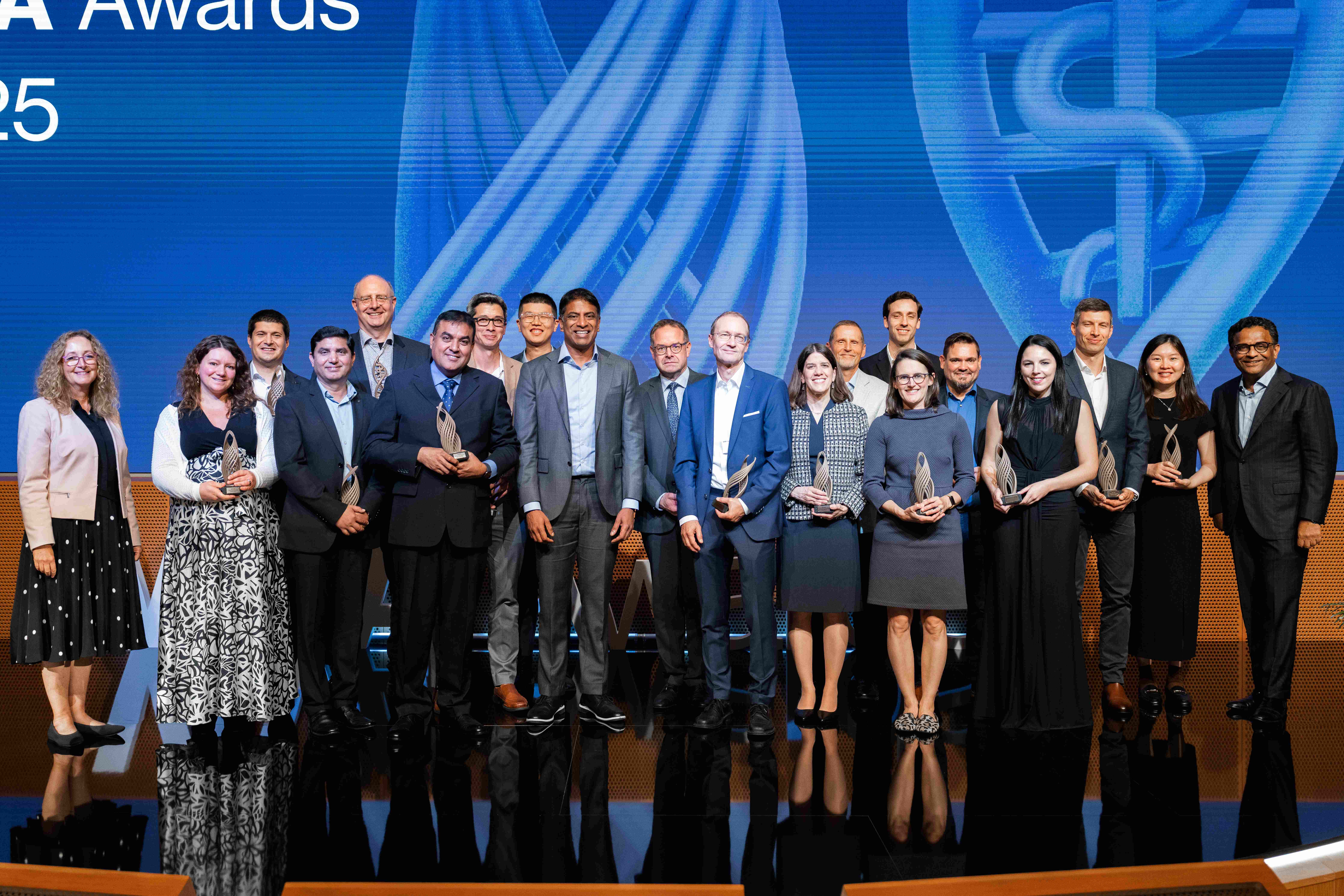
The key to faster development lies in molecular modelling and structural biology. With advances in computing power and artificial intelligence, we can now predict the structure of a protein from its amino acid sequence with high accuracy. “This allows us to anticipate the stability, efficacy, and safety of molecules before conducting experiments, significantly shortening the early development phase and enabling targeted design of new active substances,” explains Dr. Miličić, who received the Novartis VIVA award for his work in molecular modelling. The award recognizes individuals and teams who pioneer new paths in pharmaceuticals: “I received the award for transferring innovative approaches in protein structure modelling to early formulation development and protein engineering. The award highlighted the combination of innovation and practical applicability of my work.”

I’m honored to receive VIVA award, as it highlights combination of innovation and practical applicability of my work.
The future of pharma Is closely tied to artificial intelligence
Molecular modelling has been made possible by the rapid development and support of artificial intelligence, which will enable further progress. “Computational approaches allow us to improve existing proteins and create new ones with optimal properties—a process known as de novo design. Machine learning also helps shorten the entire drug development pathway, from basic research and molecule discovery to market production,” he says. Additionally, AI optimises repetitive tasks such as documentation preparation, literature review, or email responses, saving researchers valuable time.
Molecular modelling and intelligent protein design promise faster, safer, and more effective treatments in the future. Dr. Miličić expects even greater integration of protein structure analysis, machine learning methods, and molecular dynamics in drug development in the coming years, eventually leading to a deep understanding of biological pathways that will allow prediction of clinical trial outcomes. “Our work will contribute to more rational design of biological medicines, where computational models and experimental data are closely linked. Moreover, computational methods will enable targeted research in the lab, accelerating the development of innovative medicines,” he adds.
A culture that encourages research and innovation
Breakthrough innovations stem from a work environment and company culture that encourage innovation, collaboration, and courage to test new ideas, with a clear focus on the patient. “Novartis provides access to interdisciplinary teams, advanced technologies, and a collaborative culture, allowing us to quickly test and integrate new ideas into projects,” says Dr. Miličić.
And what advice would he give to young researchers who wish to follow his path? “Be curious, open to interdisciplinary work, and don’t shy away from difficult questions—those lead to the biggest breakthroughs. Consistent work and perseverance are important. And of course, a bit of luck,” concludes the VIVA award winner.