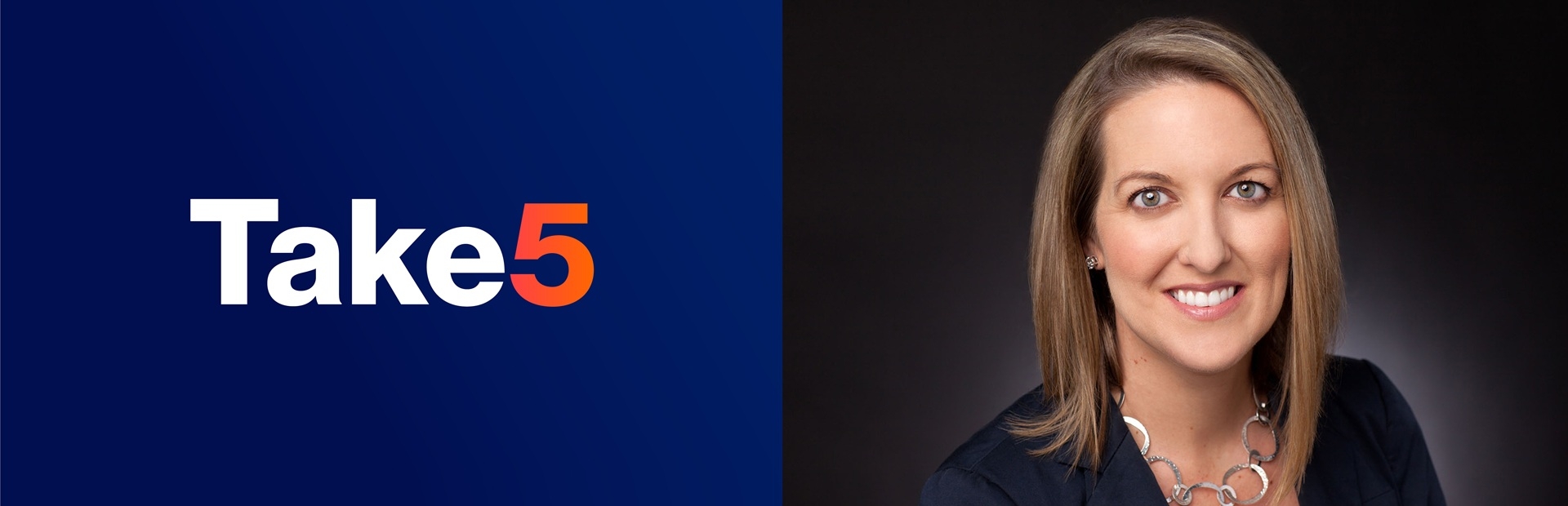
Five questions with Eden Wells, Chief Insights and Decision Science Officer at Novartis US

In this interview, Eden discusses the pivotal moments that shaped her career, her passion for advancing patient care and her vision for a future where timely and accessible healthcare is a reality for everyone. 


Nov 13, 2025
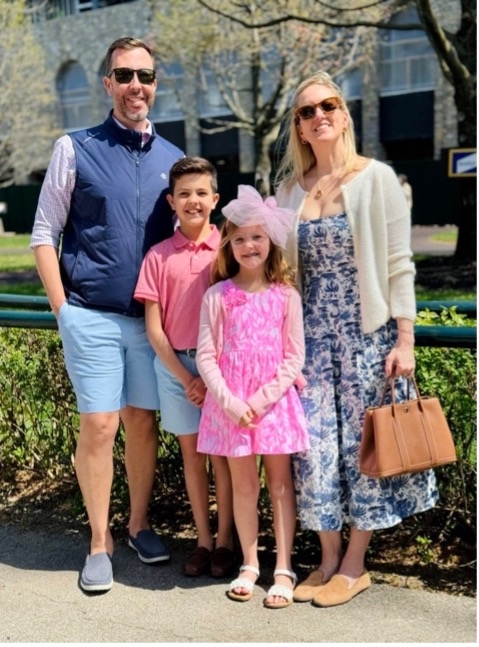
A family of four dressed in spring attire, standing together outdoors
Eden with her husband and two children

For as long as she can remember, Eden Wells, Chief Insights and Decision Science Officer at Novartis US, has been curious about how things work and uncovering the patterns that connect them. That curiosity has led to a remarkable career in healthcare and is joined by a deep sense of purpose sharpened by heartbreak and hope.

Three years ago, Eden lost her sister, Rebecca, to metastatic breast cancer. This experience reinforced Eden’s conviction that more needs to be done to ensure that every patient has access to consistent, quality care. She has been fighting for that reality ever since.

Today, Eden leverages her personal mission, her deep compassion for patients, and her background as both a research scientist and a data scientist to make sure people like Rebecca are diagnosed earlier, heard sooner, and have better access to the treatments they need.

In this Q&A, she reflects on why asking the right questions is what matters most when it comes to helping more patients.

1. How did your journey lead you to the role of Chief Insights and Decision Science Officer at Novartis US?

I’ve spent over 25 years in the healthcare industry. First, I earned my college degree in microbiology and then I began working as a bench scientist, which allowed me to indulge my fascination with understanding how things work on a molecular level. 

As I moved into roles across nearly every corner of pharma, from clinical operations to patient services, that curiosity to go below the surface and make connections stayed with me. Over time, it evolved into a focus on how we can break through healthcare’s complexities and make experiences more seamless for patients, which is a core driver for me in my role as Chief Insights and Decision Science Officer.

2. You have taken on many different roles over your career. What’s the thread that binds them together?

Over the course of my career, every role I’ve taken has brought me one step closer to my mission: Understanding and addressing the unique experiences of every patient and healthcare provider we serve. After losing my sister, this mission became profoundly personal. 

For instance, prior to taking on my current role, I helped build and lead the Novartis Patient Support organization here in the US, bringing services for patients who were prescribed Novartis therapies in house. This allowed us to fully support our patients from fulfilling pre-authorization requirements to addressing gaps in coverage.

Building bridges across my organization, patients and the treatments they need has been at the core of many of my roles.

As head of IDS, my team and I are at the forefront of using AI and AI-enabled data products to support every discipline, from coaching our field teams to facilitating more efficient regulatory reviews. By accelerating and connecting these workflows, we are creating an integrated data ecosystem, where information flows seamlessly, so that we can be more responsive to the needs of our customers and patients.

Building bridges across my organization, patients and the treatments they need has been at the core of many of my roles.

3. You’re leading a new team at Novartis focused on deepening our understanding of customer and patient experiences. What does that mean in practice?

A group of people in colorful attire stand together, smiling. Behind them, musicians perform on stage
Eden and members of her IDS Leadership Team enjoying festivities with their teams in Hyderabad, India.

My role is to help people make better decisions, faster, and with more confidence. My team is building a system where data, insights and AI capabilities guide us toward better decisions, better strategies, and better care. 

We do this across our entire commercial portfolio in the US, and use behavioral science, market research and advanced analytics to uncover the gap between what customers say, what they actually do, and why. My team is unlocking those insights to get a clearer and more complete picture of customers and other healthcare stakeholders. That kind of deep human understanding can change everything – from strategies to outcomes.

When we’re empowered by that knowledge, we can help physicians find and diagnose the right patients earlier. We can identify and reduce roadblocks to access. And our teams can respond more quickly to patients’ needs in the real world.

4. Your work is at the forefront of innovation and AI, which comes with a lot of change and uncertainty. How do we make sure new technologies deliver positive change for patients?

While technologies continue to evolve rapidly, we are steadfast in our goal of arming every Novartis associate—from the scientists to the field force—with the tools, insights and AI capabilities they need to create deeper impact for our patients and customers. 

I ultimately see a future where healthcare is predictive, personalized and fueled by data and real-time insights for the benefit of patients. It’s the kind of future my sister Rebecca didn’t get to see.

We also co-create inventive solutions with our people, our customers and our partners. One example is a solution focused on helping physicians find and serve more eligible patients faster than ever before.

I ultimately see a future where healthcare is predictive, personalized and fueled by data and real-time insights for the benefit of patients. It’s the kind of future my sister Rebecca didn’t get to see. And that’s what keeps me asking myself and my teams: How can we make this better for the next person?

5. You’ve built and led high-performing teams. What kind of culture are you working to shape at Novartis?

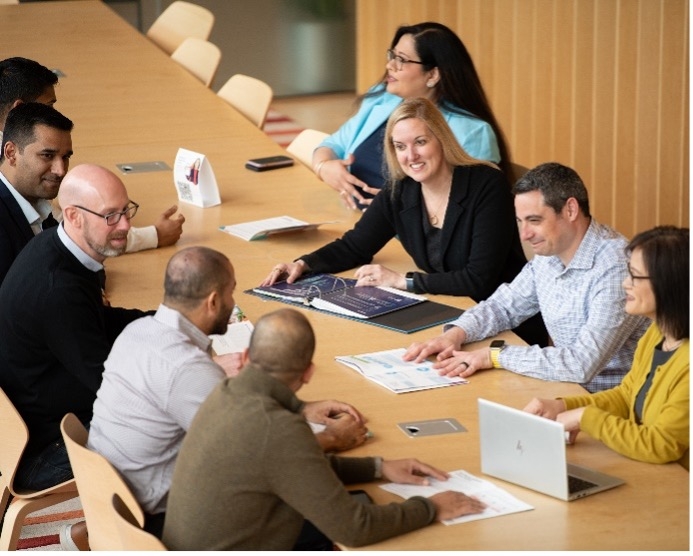
A group of men and women sitting around a conference table, actively participating in a discussion
Eden and her IDS colleagues in discussion.

For me, it’s just as important to invest in the people around me as it is to invest in the next generation, especially women and groups who historically haven’t always seen themselves reflected in this industry. The pharmaceutical industry depends on fresh ideas and perspectives, and we seek out talent who can challenge the status quo and bring bold, creative thinking to complex problems, which includes knowing how to leverage technology and AI to get us to the best outcomes faster. That’s the kind of thinking and skillset that unlock collective power.

I view my role as a leader as a “force multiplier.” I strive to create an environment where others can achieve their most extraordinary work. I encourage my teams to challenge each other with best intentions, and I counsel them to quickly adapt based on findings and feedback.  I often ask my teams: How can you bring the best out of each other by thinking about working in a different way? 

Learn more about Eden: