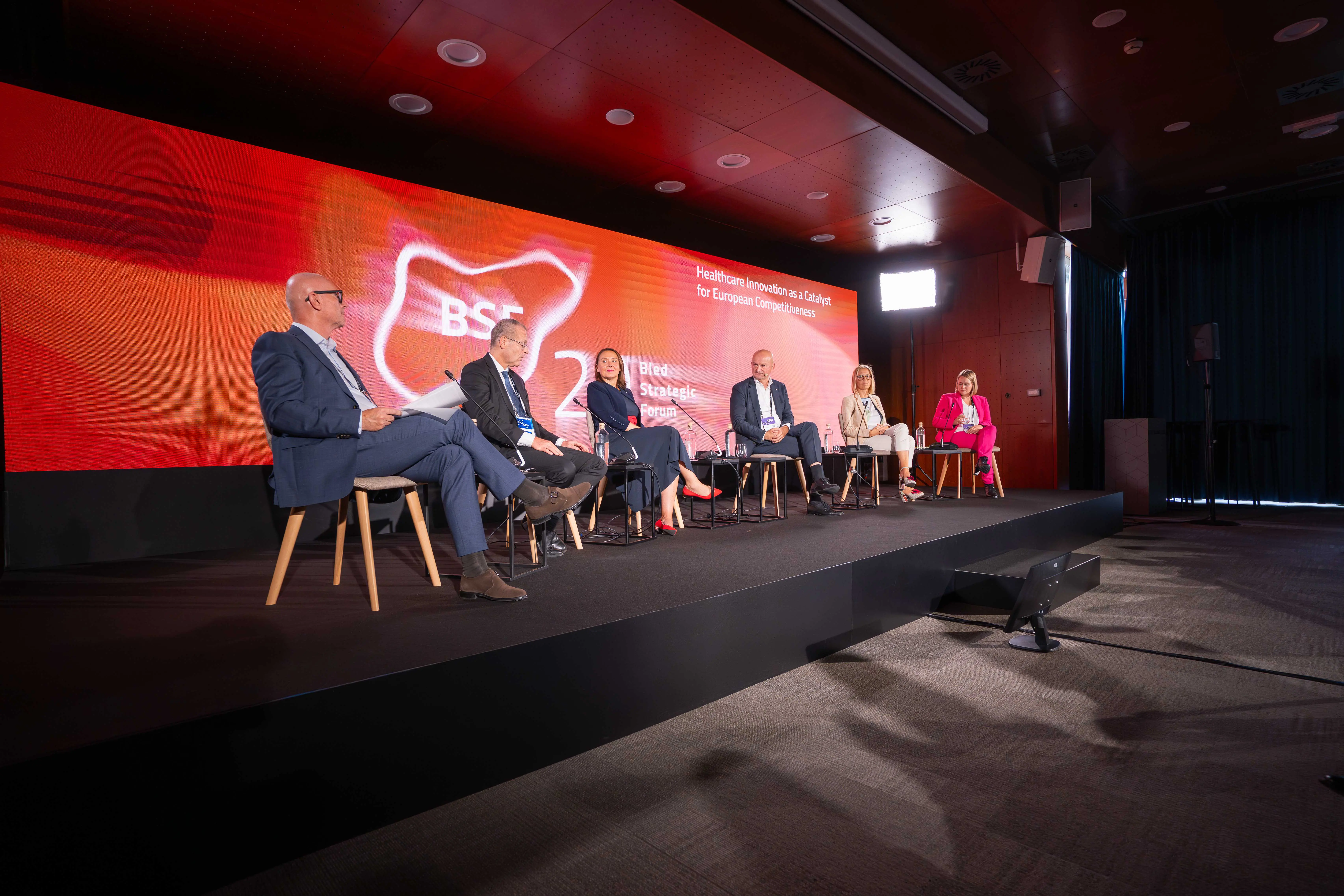
- At the Bled Strategic Forum, Novartis participated in a panel titled “Healthcare Innovation as a Catalyst for European Competitiveness", attended by Georg Schroeckenfuchs, Head of the Southern, Eastern, and Central Europe, Russia Region (SERCE) at Novartis.
- The panelists discussed Europe's competitiveness in healthcare and pharmaceutical innovation, healthcare as a driver of economic growth, access to innovation, and the robustness of the European healthcare system.
- During the panel, Novartis called for urgent reforms to enhance Europe's competitiveness, promote innovation, and ensure faster and broader access to innovative medicines.
Ljubljana, September 2, 2025 – As one of the leading European pharmaceutical companies, Novartis is concerned about the decline in European competitiveness compared to other regions and countries, particularly the USA and China. At the Bled Strategic Forum, Novartis called for urgent reforms to enhance Europe's competitiveness, promote investments in innovation, and ensure faster access to medicines. This was discussed during a panel titled "Healthcare Innovation as a Catalyst for European Competitiveness," which included Hans Henri P. Kluge, Regional Director for Europe at the World Health Organization, Irena Hrstić, Minister of Health of Croatia, Slovenian Minister of Health Valentina Prevolnik Rupel, Malina Müller, Head of Health Economics at the WifOR Institute, and Georg Schroeckenfuchs, Head of SERCE region at Novartis.
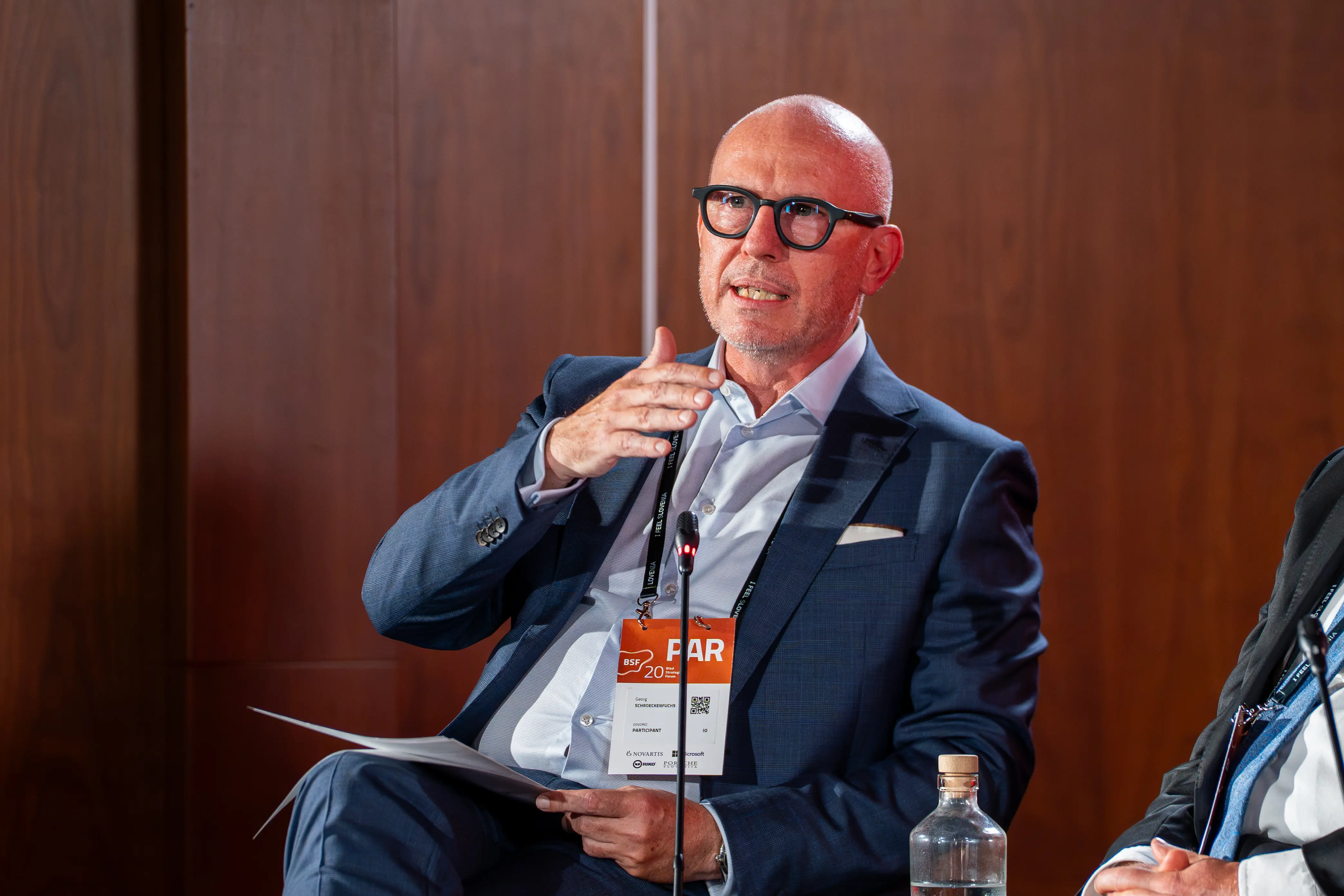
“Europe has the science, talent, patient interest, and infrastructure to remain a global leader in life sciences and innovation. But our competitiveness is under real pressure. Regulatory and access barriers, environmental policy demands, and the erosion of intellectual property are slowing us down—while investment and R&D continue to decline. With EUR 1.5 trillion of economic value, created by the life science industry in Europe, at stake, we must decide whether Europe will lead as an innovator or fall back as a consumer of innovation. The moment to act is now," emphasized Georg Schroeckenfuchs from Novartis.
Investments in innovation are crucial for economic competitiveness and public health
The decline in European competitiveness in the life science industry has a direct impact on public health and patients. Today, patients in Europe wait much longer for new medicines compared to certain other regions – on average, it takes 578 days from the regulatory approval of a new medicine in the EU to its actual availability in the country, with significant differences between countries.
"Share of clinical trials in Europe dropped from 44% in 2009 to 21% in 2024, meaning that less patients in Europe have access to novel, potentially lifesaving treatments. We also see slower medicine approvals. On top, one in five medicines which gained regulatory approval in the US over the last decade were either not submitted for, or not successful in gaining regulatory approval in the EU. Promoting investments in healthcare and changes in regulatory processes at the national levels would improve competitiveness and, above all, access to medicines," said Schroeckenfuchs during the panel.
Novartis sees key changes to increase European competitiveness by addressing structural challenges such as fragmented access policies, restrictive pricing frameworks, and the slow adoption of new technologies. Delays in implementing necessary reforms make Europe less attractive for research and development investments. Industry needs an environment that supports its investments and without urgent reforms that recognize the value of medicines, Europe risks losing its competitiveness as a global hub for life sciences and innovation.
Novartis remains committed to Europe, but expects decisive action
Novartis is one of the largest pharmaceutical and economic entities in Europe, with significant manufacturing, research, and distribution capacities, including in Slovenia. With its medicines, it reaches over 46 million patients in Europe and 30,000 patients in clinical trials. In the region, Novartis employs 31,500 people across 65 locations and contributes 30.7 billion euros to the gross domestic product across the EU and Switzerland.
"We are proud to be part of the European scientific and industrial backbone," said Georg Schroeckenfuchs, adding, "In the period 2025-2027, we will allocate nearly 2 billion euros to strengthen our European manufacturing and supply chain, with part of this within Slovenia. In doing so, we pursue a sustainable principle with ambitious goals to reduce our carbon footprint, waste, and water consumption. However, we have been clear that our future investments will be in markets that value pharmaceutical innovation and implement policies and regulations conducive to fast and broad patient access to innovative medicines. We believe that a strong partnership of all relevant stakeholders and open discussions as we see at the Bled Strategic Forum are key to strengthening the European position.”