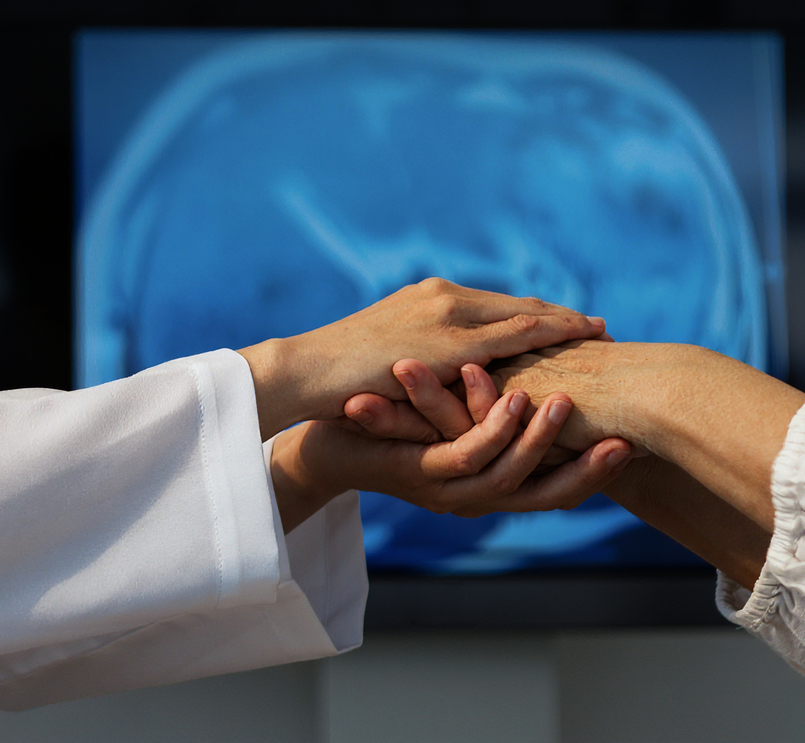
At Novartis, we're doubling down on our commitment to neurology, expanding our legacy of innovation in spinal muscular atrophy (SMA) and multiple sclerosis (MS) to work in neuroimmunology, neurodegeneration, and neuromuscular diseases. Our goal is to protect people’s health across their lifespan, developing more treatment options that may lead to better outcomes.
Neuroscience is one of the largest areas of unmet medical need and one of the most challenging frontiers in drug development.
People living with MS, a chronic inflammatory disease of the central nervous system, experience a wide range of life-limiting symptoms, ranging from problems with vision, movement and sensation to fatigue, pain, and issues with memory and thinking.1,2 Individuals also live with the unpredictability of when these symptoms might progress.1 Addressing the biggest challenges for people living with MS means relentless discovery, development, and delivery of solutions.
HD is a rare, autosomal dominant neurodegenerative disease caused by a mutation in the huntingtin (HTT) gene.3 HD causes nerve cells of the brain to slowly degenerate leading to a progressive decline in motor, cognitive, and behavioral function, affecting nearly every aspect of daily life for patients and their families.3 HD develops in individuals who inherit the disease-causing mutation and ultimately leads to substantial disability and shortened life expectancy.3 Advancing innovative therapies has the potential to help address one of the greatest unmet needs in neurodegenerative disease.
SMA is a rare, genetic neuromuscular disease caused by a mutation of the survival motor neuron 1 (SMN1) gene.4 SMA leads to progressive muscle weakness, paralysis, and, when left untreated in its most severe forms, can lead to death.4 It can affect nearly every aspect of daily life – not only for patients, but also for their families and caregivers. While advances in care have improved outcomes, many individuals may continue to face substantial physical and emotional challenges.5 All those diagnosed with SMA should be able to benefit from cutting-edge technology, through turning promising transformative medicines into proven treatments.
DMD is a rare, severe, early-onset genetic neuromuscular disorder caused by mutations in the dystrophin (DMD) gene, resulting in the dysfunction or absence of the dystrophin protein.6 The disease leads to worsening muscle weakness and loss of physical function over time, with many individuals eventually losing the ability to walk and requiring increasing support with daily activities. As DMD progresses, cardiac and respiratory complications become significant contributors to disease burden, profoundly affecting patients and their families.6
DM1 is a rare, progressive, multisystem neuromuscular disease caused by an expansion of CTG trinucleotide repeats in the DM1 protein kinase (DMPK) gene. The disease varies widely in its severity, presentation, and age of onset.7 DM1 affects skeletal muscle as well as other organs, including the heart, lungs, and gastrointestinal tract, leading to myotonia, muscle weakness, and a range of complications that can significantly affect daily functioning.8
FSHD is one of the most common forms of muscular dystrophy and is caused by an abnormal expression of the double homeobox 4 (DUX4) gene.9 The rare neuromuscular disease leads to worsening muscle weakness, and pain and fatigue that can affect mobility and daily functioning.9 Symptoms and disease progression can vary considerably between individuals, resulting in different levels of disability and functional impact over time.9

Neurological diseases can affect the very things that make us who we are. Behind every diagnosis is a person, a family, and a future worth fighting for. That is what drives us. By pushing the boundaries of neuroscience and pursuing disease-modifying therapies, we are working to redefine what's possible for patients.
Tracey Dawson, PhD
SVP, US Therapeutic Area Head, Neuroscience

New destinations. New possibilities.
Cory L. lives with SMA Type 2 and has turned his passion for travel into a mission to make the world more accessible. Watch him explore new destinations, share his experiences, and inspire others to see what’s possible.

Everyday moments. Everyday confident.
Charlie Z. has SMA Type 3, but that doesn’t stop him from competing in wheelchair basketball and chasing his goals. Watch him call his own shots and SMAsh limits.
Helpful resources for Multiple Sclerosis
Novartis, in collaboration with physicians and patients, has developed helpful resources that are designed to empower people living with MS to have meaningful discussions with their care team.

My MS Workbook Interactive
The My MS Workbook is designed to help people living with MS better understand and communicate their experiences, priorities, and treatment goals. Patients can use this to prepare for their medical appointments and support more informed conversations with their HCP.
Additional resources
Other therapeutic areas

Cardiovascular, renal and metabolic
Discover how we are utilizing groundbreaking science, cutting-edge technology and strategic collaborations to help avoid preventable deaths and transform outcomes for people with cardiovascular, renal, and metabolic diseases.

Immunology
See how we are creating a world where health care professionals have more options and people living with immunological conditions can live their daily lives without limitations.

Oncology
Combining the power of science and empathy to unravel the inner workings of cancer and develop innovative therapies that restore hope to those with cancer and their loved ones.