
We spoke with Younos Abdulsattar, Executive Director and Medical Team Leader, Novartis Cardiovascular & Metabolic (CVM), to help break down the 2026 American College of Cardiology/American Heart Association multisociety dyslipidemia (cholesterol) guidelines.
What are the 2026 American College of Cardiology (ACC)/American Heart Association (AHA) dyslipidemia guidelines?

The 2026 guidelines, issued by the American College of Cardiology, American Heart Association, and 9 other medical societies are expert recommendations about the management of cholesterol and other blood lipids. Think of them as a guide you and your doctor can use to understand your numbers and decide if any steps—like lifestyle changes and, if needed, medicine—are needed to help lower your cardiovascular disease risk. “Cardiovascular risk” is the chance of developing a cardiovascular event (such as heart attack or stroke) over time based on the presence and severity of risk1.
Key definitions (quick guide):
- Dyslipidemia: Cholesterol and/or other blood lipids are not in a healthy range1
- LDL-C: The “bad” cholesterol2
- Treat-to-Target: An approach that focuses on lowering a patient’s LDL-C to a specific number or goal based on cardiovascular risk3
- ASCVD: Atherosclerotic cardiovascular disease, where plaque builds up in arteries, raising heart attack and stroke risk4
- Lp(a): Lipoprotein (a), also known as "Lp(a)" or "L-P-little a,” a mostly inherited type of lipid (fat) particle in the blood that can cause plaque buildup and can raise heart disease risk5,6,7,8
Why does high LDL-C (“bad” cholesterol) increase heart attack and stroke risk?
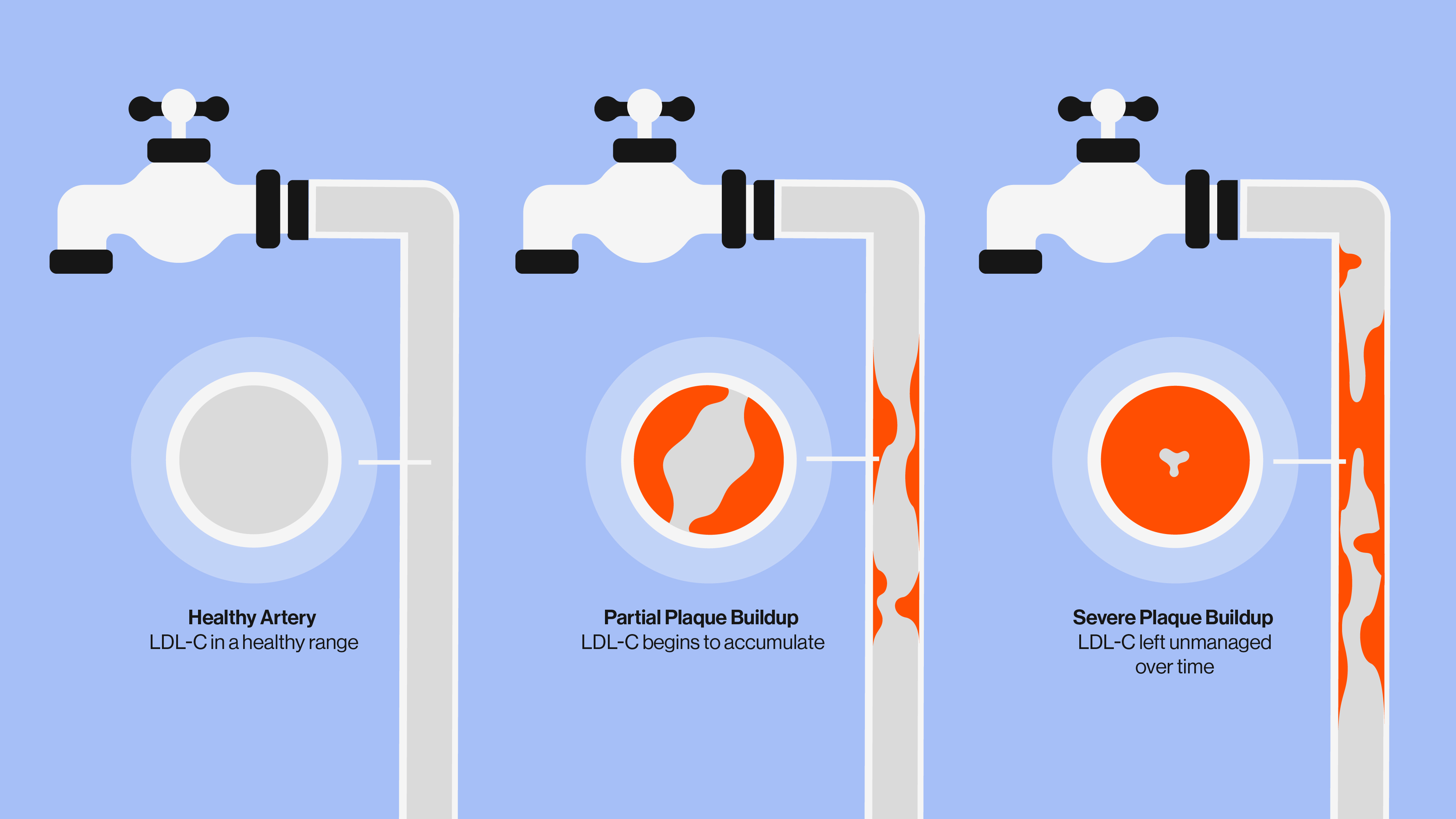
Over time, extra cholesterol can build up inside the walls of your arteries (blood vessels), forming plaque (fatty buildup). Plaque can narrow or block an artery, making it harder for blood to reach the heart or brain2.
A helpful way to picture it: Cholesterol plaque is like a drain that slowly clogs over many years. The longer it builds up, the higher the chance of a serious blockage that can lead to a heart attack or stroke2.
What are some of the changes in the 2026 multisociety dyslipidemia (cholesterol) guidelines?
- Starting earlier can make a bigger difference
Managing LDL-C and keeping it in a healthy range earlier in life can lower risk over the long term—not just when you’re older1. - Individual LDL-C treatment goals are back
Your doctor may focus on reaching a specific LDL-C number based on your personal risk, instead of using a one-size-fits-all approach1. - A fuller picture of your risk
The guidelines encourage using more tools and tests to understand overall heart disease risk—including whether inherited (genetic) factors may be playing a role. Lp(a) is called out as a cardiovascular disease risk factor and testing is recommended at least once in every adult’s lifetime1.
Read on for more information on Lp(a).
You mentioned a “treat-to-target” approach for LDL-C management. Can you help explain this term?
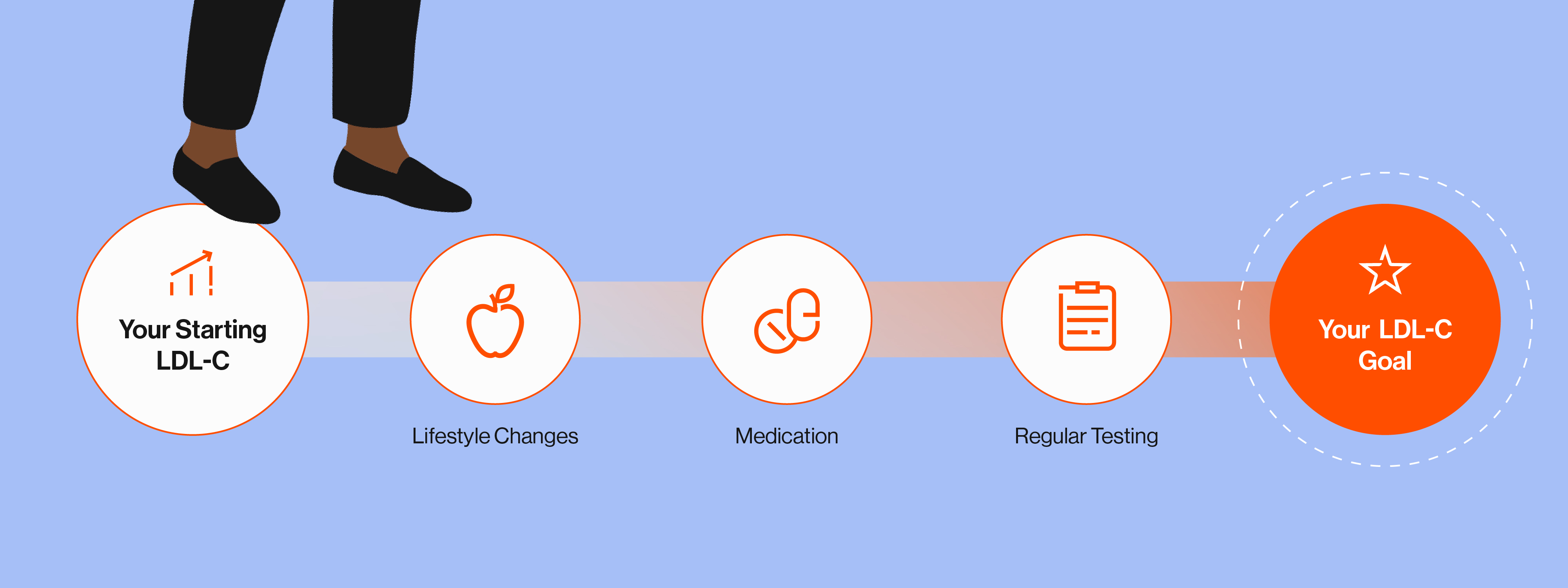
“Treat-to-target” simply means you work with your doctor on an LDL-C number to aim for and then adjust your plan until you reach it3. It focuses on getting you to a goal number, not just lowering your cholesterol by a certain percentage. With this approach, you and your doctor agree on one clear LDL-C goal, check your progress, and adjust together until you get there.
Ask your doctor: “What is my LDL-C goal, and when should we recheck my labs to see if I’m on track?”
With this approach, you and your doctor agree on one clear LDL-C goal, check your progress, and adjust together until you get there.
Younos Abdulsattar, PharmD, Executive Director and Medical Team Leader, Novartis Cardiovascular & Metabolic (CVM)
Why do the guidelines emphasize regular LDL-C testing?
The guidelines recommend regular cholesterol checks because your LDL-C may not reach its goal with the first plan your doctor recommends. Follow-up testing shows whether your treatment is working and whether anything needs to be adjusted1.
Why it matters: Reaching—and staying at—your LDL-C goal helps lower your risk of having a heart attack and stroke. Keeping LDL-C at the target level over time can help reduce plaque buildup and the chance of having a future heart attack or stroke2,3.
Guidelines recommend maintaining bad cholesterol levels below 70 mg/dL if you have heart disease, and it may be reasonable to target below 55 mg/dL for some people. For those without a history of heart disease, it is recommended to keep bad cholesterol below 100 mg/dL. Regular testing can help you1:
- See how your numbers are trending over time1
- Decide with your doctor if you should adjust lifestyle changes or medication
- Stay on track—especially if you’re taking medication long term1
Ask your doctor: “How often should I recheck my cholesterol, and what will we change if I’m not at my LDL-C goal?”
What is the PREVENT risk calculator mentioned in the guidelines, and how does it help your doctor make decisions?
The PREVENT risk calculator is a tool that estimates the chance of having a heart attack or stroke over the next 10 years and 30 years1. The goal is to:
- Estimate personal heart attack and stroke risk (short and long term)1
- Guide decisions about prevention steps (lifestyle changes, medications, and follow-up)1
- Show how today’s choices can affect risk over time1
Lp(a) is mentioned a lot in the guidelines. What is it?
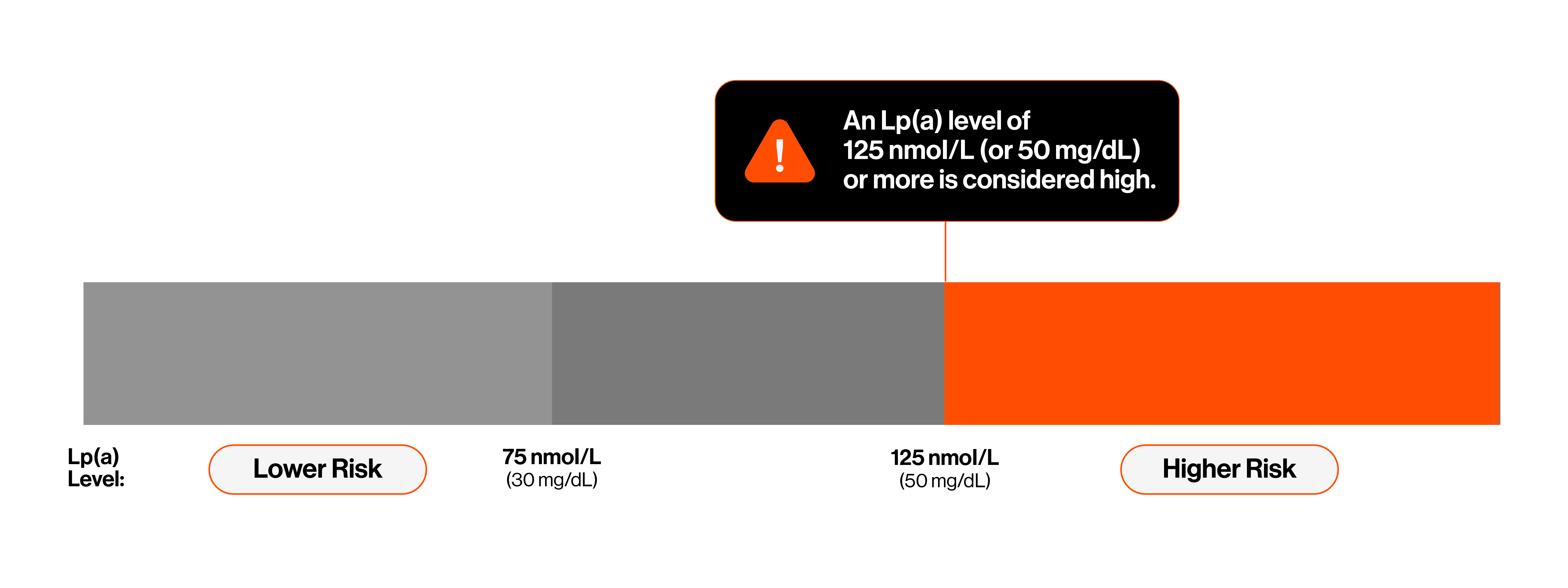
Lipoprotein (a), also known as "Lp(a)" or "L-P-little a,” is a type of lipid (fat) particle in your blood. Everyone has Lp(a) in their blood, but a high* Lp(a) level can cause harmful blockages in your artery walls, which may lead to a heart attack or stroke1,5,9,10,11.
High Lp(a) Facts:
- Lp(a) levels are largely inherited (meaning it runs in families)5
- Lp(a) levels are usually set around age 5 and typically stay the same throughout life12
- Lifestyle changes, like eating well and exercising, usually don’t lower high Lp(a)12
- High Lp(a) can raise heart disease risk even when LDL-C is in a healthy range5,6,7,8
The More You Know: Lp(a) is now recognized as an important factor in determining someone’s chance of having a future heart attack or stroke, even having one earlier in life. “Early” means having a heart attack or stroke younger than anyone might expect. For men, this means before age 55, and for women, before age 651,12. The guidelines reinforce why this is a risk factor doctors and patients should be paying attention to1.
*If Lp(a) is 125 nmol/L (50 mg/dL) or higher, this indicates a high level.
How can you find out your Lp(a) level?
You can find out your Lp(a) level through a blood test5. Per the 2026 ACC/AHA Joint Committee dyslipidemia guidelines, it is recommended that all adults get their Lp(a) level tested at least once in their lifetime1. It’s especially important for people who have had an early heart attack or stroke to get their Lp(a) levels tested12.
Because high Lp(a) is mostly inherited and runs in families, guidelines recommend testing immediate family members if one person in the family is found to have high levels5,8.
What is recommended as the next step if your Lp(a) level comes back high?
While there are currently no FDA-approved medications to lower Lp(a), you can still work with your doctor to take action today to help lower your overall heart risk14. Actions to discuss with your doctor may include:
- Eating healthy and exercising regularly1
- Getting a good night’s rest (seven to eight hours of sleep daily)13
- Avoiding smoking1
- Managing other risk factors like high blood pressure, LDL-C, and diabetes1
“Lp(a) is now recognized as an important factor in determining someone’s chance of having a future heart attack or stroke, even having one earlier in life. The guidelines reinforce why this is a risk factor doctors and patients should be paying attention to1.”
What are the most important things patients should remember?
- Know your numbers
Ask your doctor about LDL-C and Lp(a) testing. Lp(a) testing can be especially important if you or a close family member had an early heart attack or stroke12. - Earlier action is better
Heart disease risk can build over time—having discussions with your doctor early matters1. - Work toward clear goals
Your LDL-C goal depends on your personal risk, so your target may look different from someone else’s. Early and regular check-ins with your doctor can help you stay on track and support long-term heart health.
For the past four decades, Novartis has contributed to the advancement of cardiovascular science to help unlock longer and healthier lives for all. To learn more about LDL-C, visit What Is LDL-C?
To learn more about Lp(a), visit WhatIsLpa.com.