Moments That Count is a campaign that has been developed and funded by Novartis Pharmaceuticals UK Limited, with insights from breast cancer patients.

It's the everyday moments that matter for people living with breast cancer. Whether it's what you'd consider a good day, or a bad one. Appointments with your oncologist where you learn something new about your condition, or yourself, count. Days where you find the strength to get out of bed, if only to sit up and read for a while, count. The evenings spent with loved ones, after a tough day you took head on, count. Every seemingly insignificant moment; a cup of tea or a smile, counts. Every single second of every single day, counts.

Moments That Count has been developed to support patients, family and friends of those living with breast cancer, whatever stage of the journey they are on.

Whether you are living with or know somebody living with breast cancer, the Moments that Count website is dedicated to giving you support and knowledge to have better, more informed conversations with your healthcare professionals. You can view the website here.

The Moments that Count campaign has been created with insights from real patients. Follow the journeys of Claire, Laura and Juliet as they share their own personal stories to learn about their experiences.


Jump to:

Understanding advanced breast cancer

Symptoms of advanced breast cancer

Types of breast cancer


Woman in surgery


Understanding advanced breast cancer 

Novartis Microscope Icon

Significant medical advances have contributed to breast cancer survival in the UK doubling in the last 50 years.1 In addition, public awareness and commitment across the country in providing research funding supports many women diagnosed with advanced stage breast cancer.

Despite this, breast cancer remains the most common cancer in the UK, with around 49,423 women diagnosed each year... that’s around 135 women every day.2 Nearly a third of women diagnosed with earlier stages of breast cancer will eventually develop advanced disease.3


What is advanced breast cancer?

Advanced breast cancer or ABC (also known as secondary, metastatic or stage 4 breast cancer) is when the cancer originating in the breast(s) has spread to other parts of the body.4


The most common places that cancer can spread to include...4,6

Brain icon
Brain
 
liver icon
Liver
 
lungs icon
Lungs
 
lymph nodes icon
Lymph nodes
 
bones icon
Bones
 
skin icon
Skin
 

Although advanced breast cancer cannot be cured, it can be treated. There are many different options of treatments that can keep it under control for longer, prolong life, relieve symptoms and maintain or improve quality of life. Potential treatments will depend on a patient’s prognosis.


Family relaxing


Symptoms of advanced breast cancer 

The difference between primary and advanced breast cancer

In most cases, the first symptom of primary breast cancer people notice is a lump or an area of thickened tissue in the breast. While these are not always cancerous, it is recommended to have these checked by a doctor. Other symptoms of primary breast cancer can include:5

  • A change in the size or shape of one or both breasts
  • Discharge from either nipple, which may be streaked with blood
  • A lump or swelling in either of the armpits
  • Dimpling of the skin around the breasts
  • A rash on or around the nipple
  • A change in the appearance of the nipple, such as when it becomes sunken into the breast
     

People with advanced breast cancer often experience different symptoms depending on where the cancer has spread to. Some people may also have some general symptoms which include feeling much more tired than usual, loss of appetite, feeling generally unwell or unexplained weight loss.6

bones keyline icon

The most common symptom of breast cancer that has spread to the bone (bone metastasis) is a sudden, noticeable new pain. However, other possible signs include:6,7

  • Hypercalcaemia – elevated levels of calcium in the blood. Symptoms can include fatigue, weakness, nausea, loss of appetite, and/or dehydration. If left untreated, this can lead to a bone-weakening disease called osteoporosis
  • Bone fractures – this is when there is a break in the bone, which can be due to bone thinning or direct effect of cancer spreading to the bone and causes pain and inability to move the affected area without pain
  • Spinal cord compressions – pressure on the spine requires urgent treatment. Symptoms can include pain in the back or neck, numbness or weakness in an area of the body, difficulty passing urine or having bowel movements
lungs keyline icon

Spread of breast cancer to the lung(s) (lung metastasis) can be symptomless. However, symptoms can include discomfort in the lung, shortness of breath, coughing up blood and a persistent cough. Other signs include:6,8

  • Pleural effusion – build-up of excess fluid between the layers of tissue outside the lungs, which cause pain on breathing, cough, or shortness of breath
  • Wheezing – whistling or rattling sound in the chest
  • Pain in the lung
Liver keyline icon


Liver metastasis might be found incidentally via abnormal LFTs and the patients could be completely asymptomatic. If the cancer spreads to the liver, patients may experience pain or discomfort in the lower right-hand side of the ribs. Other signs include:6,9

  • General feelings of unwellness
  • Loss of appetite
  • Fatigue
  • Jaundice – yellowing of the skin or eyes caused by a build-up of bile in the blood
  • Bloating
skin keyline icon


If the cancer has spread to the skin, patients may experience the following symptoms:6

  • Lumps which can often be firm and painless
  • Inflamed skin – areas of redness, swelling, or irritation
  • Bleeding, pain, or infections
brain keyline icon

If the cancer has spread to the brain the symptoms patients experience may be dependent on which part of the brain is affected and can lead to the following symptoms:6,10

  • Muscle weakness, numbness, feeling unsteady (ataxia)
  • Seizures (fits)
  • Mood/personality changes
  • Sensory changes
  • Memory problems


Types of breast cancer 

Novartis Breast Icon

When a patient is diagnosed with advanced breast cancer, their doctor will recommend some tests to be done on the cancerous tissue which will help determine the type of cancer the patient has. The results will guide the doctor towards the most appropriate treatment plan. Due to the individual nature of advanced breast cancer and the hormones it affects, treatment plans tend to differ between patients. If a patient has been previously diagnosed with primary breast cancer (non-metastatic breast cancer), their doctor may recommend repeating some of the tests in order to see if the tumour cells have changed in any way since the previous test.4

Generally, tumour cells of advanced breast cancer patients can be characterised by the presence (positive) or absence (negative) of different types of receptors (proteins) in or on the cells:

  • ER+, oestrogen receptor positive
  • ER-, oestrogen receptor negative
  • PR+, progesterone receptor positive
  • PR-, progesterone receptor negative
  • HER2+, human epidermal growth factor receptor 2 positive
  • HER2-, human epidermal growth factor receptor 2 negative
  • Triple negative


ER+, ER-, PR+ and PR- breast cancer

Breast cancers expressing oestrogen receptors (ER) and/or progesterone receptors (PR) are called “hormone receptor-positive.” These receptors are proteins found inside the tumour cells. Tumours that have oestrogen receptors are called “ER-positive.” Tumours that have progesterone receptors are called “PR-positive.” These cancers may depend on the hormone’s oestrogen and/or progesterone to grow. Hormone receptor-positive cancers can occur at any age. However, they may be more frequent in women who have gone through menopause. About 60% to 75% of breast cancers have oestrogen and/or progesterone receptors. If the cancer does not have ER or PR, it is called “hormone receptor-negative.”4

Tumours that are ER positive or PR positive are much more likely to respond to hormone therapy than tumours that are ER negative or PR negative.4

HER2 and triple-negative breast cancer

About 15% to 20% of breast cancers depend on the gene called human epidermal growth factor receptor 2 (HER2) to grow. These cancers are called “HER2-positive” and have many copies of the HER2 gene or high levels of the HER2 protein. The HER2 gene makes the HER2 protein, which is found on the cancer cells and is important for tumour cell growth.4 This type of tumour can either be hormone receptor-positive or hormone receptor-negative (see above). Cancers that have no or low levels of the HER2 protein and/or few copies of the HER2 gene are called “HER2-negative.”4

If a person’s tumour does not express ER, PR, or HER2, the tumour is called “triple-negative.” Triple-negative breast cancers make up about 15% of invasive breast cancers.4


Collaborations with patient groups and patients

Collaborating with patient groups helps us better understand the needs of women living with advanced breast cancer and how we can help deliver improved care. We partner with patient advocacy groups (PAGs) and patients to reinforce overall support for patients and the healthcare system.

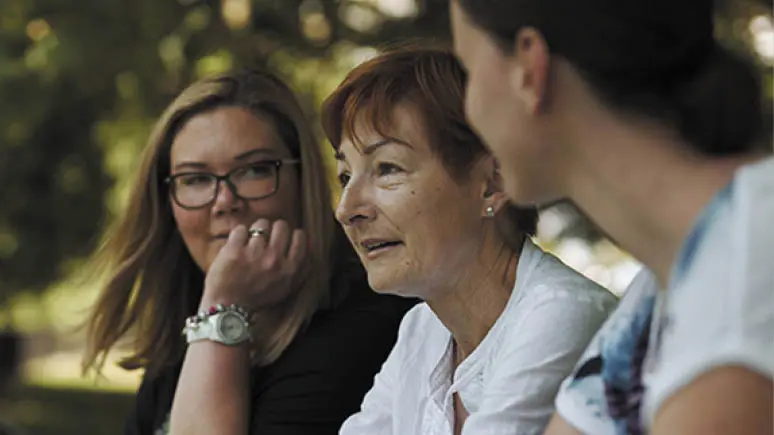
Friends meeting


The following patient advocacy groups (PAGs) provide extensive support for people living with and caring for those with advanced breast cancer, and are also involved in funding vital breast cancer research.

Breast Cancer Now Logo

Breast Cancer Now

At Breast Cancer Now we’re here for anyone affected by breast cancer. Our breast cancer nurses, expertly trained staff and volunteers, and award-winning information make sure you can get the support you need to help you live well with the physical and emotional impact of breast cancer.

For breast cancer care, support and information, call us free on 0808 800 6000 or visit www.breastcancernow.org


macmillan cancer support

 Macmillan Cancer Support

We’re here to help everyone living with cancer live life as fully as they can, providing physical, financial and emotional support. So whatever cancer throws your way, we’re right there with you.

For information, support or just someone to talk to, call 0808 808 00 00 or visit www.macmillan.org.uk


After Breast Cancer Diagnosis Logo

abcdiagnosis

At abcdiagnosis we are supporting primary and secondary breast cancer patients to make informed choices. Sharing information and up to date news on treatments, breast surgeries, consultants, hospitals and providing useful links.

For information and support visit www.abcdiagnosis.co.uk


Met Up UK Logo

METUPUK

METUPUK is a Metastatic Breast Cancer (MBC) patient advocacy group. We are working to improve outcomes for those living with MBC. We won’t stop until it is downgraded from an incurable disease to a chronic illness. We want people with MBC to gain access to the very best medicines to help them live longer and improve their quality of life. We ultimately work towards the day when MBC will be cured.

For more information, please visit metupuk.org.uk/


Collaborations with the NHS

We work in collaboration with the NHS to improve breast cancer services and care for people living with breast cancer. We call these Joint Working Projects and in March 2018 we launched a project with the Christie NHS Foundation Trust to address care pathway inconsistencies in breast cancer.

The project includes a partnership with IQVIA, a leading global provider of information and innovative technology solutions, to analyse current breast cancer pathways and identify opportunities to enhance care. The project will also evaluate patient journeys by enabling patients to record their experiences of treatment pathways through the use of innovative technology provided by the app, uMotif.

It is anticipated that findings from the project will lead to improvements in the timeliness of treatment interventions for patients, and provide clarity on where to focus resource efforts, subsequently helping to address any variation in access to treatment. To find out more about our collaborative working projects please click here.


Reporting side-effects 

If you get side effects with any medication you are taking, talk to your doctor, pharmacist or nurse. This includes any possible side effects not listed in the information leaflet that comes in the pack. You can report side effects via the Yellow Card Scheme at https://yellowcard.mhra.gov.uk/. By reporting side effects, you can help provide more information on the safety of your medication. 


If you need more information about breast cancer care for you or somebody you care about, speak to your healthcare team. They can put you in touch with the right people or organisations for a variety of concerns.

References

  1. Cancer Research UK. Breast cancer survival statistics (drop down menu). Available online at: https://www.cancerresearchuk.org/health-professional/cancer-statistics/statistics-by-cancer-type/breast-cancer#heading-Three [Last accessed: December 2024]
  2. NHS England. Cancer Registrations Statistics, England 2021. First release, counts only. Available online at: https://digital.nhs.uk/data-and-information/publications/statistical/cancer-registration-statistics/england-2021---summary-counts-only/cancer-incidence [Last accessed: December 2024]
  3. O’Shaughnessy J. Extending survival with chemotherapy in metastatic breast cancer. The Oncologist. October 2005, 10(suppl.): 20-29
  4. American Cancer Society. Triple-negative Breast Cancer. Available online at: https://www.cancer.org/cancer/types/breast-cancer/about/types-of-breast-cancer/triple-negative.html [Last accessed: December 2024]
  5. NHS. Overview - Breast cancer in women – Symptoms. Available online at: https://www.nhs.uk/conditions/breast-cancer/ [Last accessed: December 2024]
  6. Breast Cancer Now. Secondary (metastatic) breast cancer in the skin. Available online at: https://breastcancernow.org/about-breast-cancer/secondary-breast-cancer/secondary-breast-cancer-treatment/secondary-metastatic-breast-cancer-in-the-skin/ [Last accessed: December 2024]
  7. Breast Cancer. Bone metastasis: Symptoms and Diagnosis. Available online at: https://www.breastcancer.org/types/metastatic/bone-metastasis [Last accessed: December 2024]
  8. Breast Cancer. Lung metastasis: Symptoms and Diagnosis. Available online at: https://www.breastcancer.org/types/metastatic/lung-metastasis [Last accessed: December 2024]
  9. Breast Cancer. Liver metastasis: Symptoms and Diagnosis. Available online at: https://www.breastcancer.org/types/metastatic/liver-metastasis [Last accessed: December 2024]
  10. Breast Cancer. Brain metastasis: Symptoms and Diagnosis. Available online at: https://www.breastcancer.org/types/metastatic/brain-metastasis [Last accessed: December 2024]

UK | January 2025 | 309089