
What’s the biggest need for patients impacted by hidradenitis suppurativa (HS)?
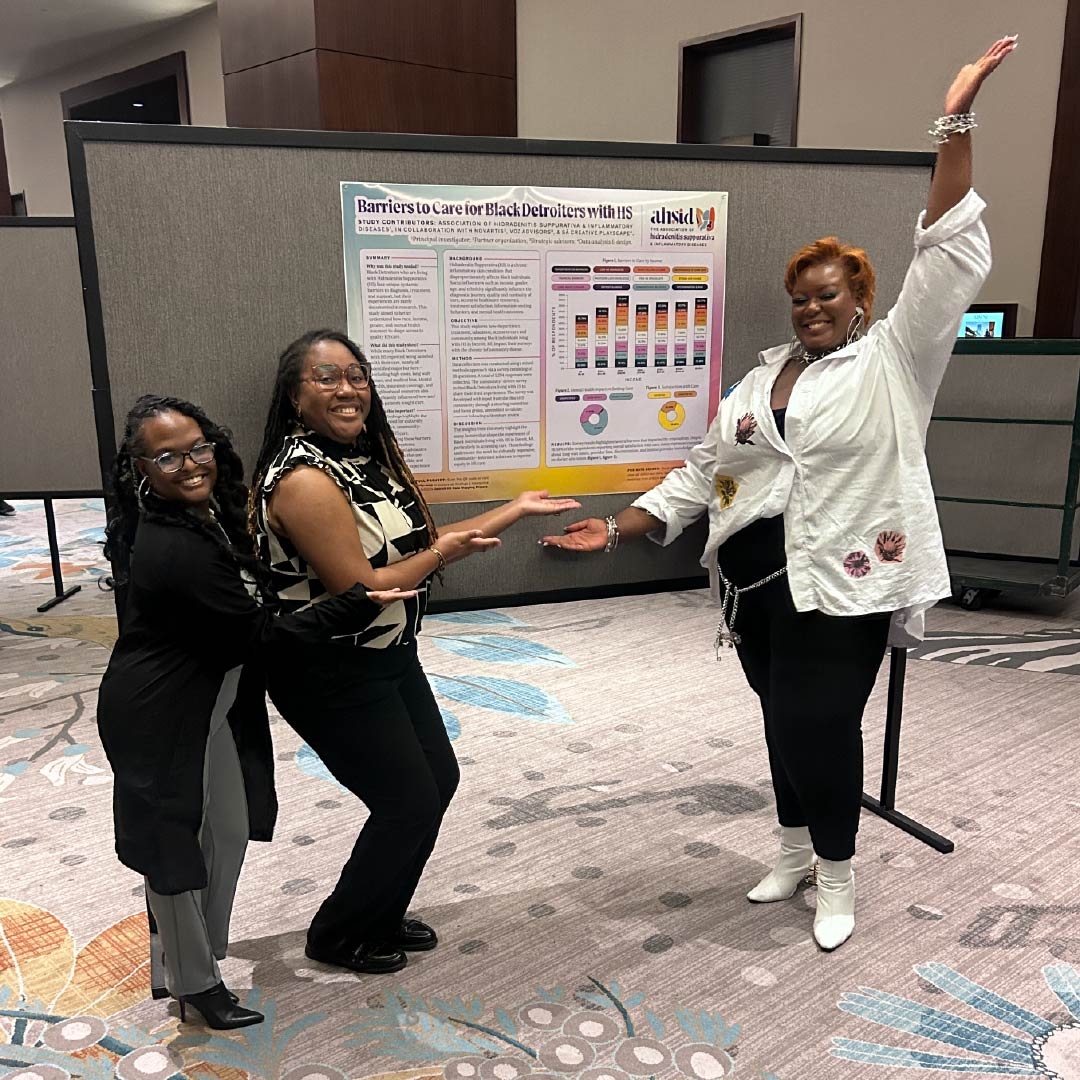
When nearly 1,300 Black Detroiters living with HS were asked that question, and invited to share their stories, their responses revealed powerful insights that could help inform how care is delivered for this often-misunderstood disease.1
HS is an inflammatory disease that causes recurring boil-like abscesses, which can rupture into open wounds and leave permanent scars.2 Beyond the physical pain, HS can take a profound emotional toll, affecting mental health, work, relationships, and overall quality of life.2,3
Although HS is not a rare disease—it affects approximately one in 100 people worldwide—many individuals remain undiagnosed or struggle to access effective treatment for a decade, even if half of patients start experiencing symptoms as early as puberty.2 In the United States, these challenges can be even greater for communities that experience health disparities, including Black individuals, who are more likely to develop HS and often face additional barriers to timely diagnosis and access to the right specialist, like a dermatologist.1,4
To elevate awareness of this disease that isn't rare—just rarely talked about—Novartis collaborated with AHSID (The Association of Hidradenitis Suppurativa & Inflammatory Diseases) to launch the Hidradenitis Suppurativa Community Mapping Project. This first-of-its-kind initiative set out to listen directly to those most impacted by HS and gather real-world data to inform future efforts to improve care.
Why the Community Mapping Project Started in Detroit
Detroit’s Black community has long faced systemic inequities that continue to shape access to health care, from limited specialist availability to resource constraints in many neighborhoods.1 For people living with HS, these barriers can make an already difficult condition even harder to diagnose and treat – making Detroit an essential place to listen, learn, and act.
That listening was led by AHSID Founder and CEO, Jasmine Ivanna Espy, and her team, working alongside Black Detroiters living with HS. Together, they shaped the survey questions, shared their experiences through focus groups, and ensured the project reflected the realities of patients navigating HS day-to-day.
The Community Mapping Project grew from AHSID’s deep belief that meaningful change starts with patients themselves. Rather than relying solely on high-level data, the goal was to gather firsthand insights that could surface shared challenges, unmet needs, and opportunities to improve care—grounded in the community’s lived experience.
The response was immediate. Although the survey was planned to remain open for six weeks, it closed after just two once 1,300 respondents had participated—an early signal of how strongly the project resonated in Detroit.
The work uncovered significant disparities in hidradenitis suppurativa (HS) that impact not just the most vulnerable, but shape the standard of care for everyone
Jasmine Ivanna Espy, AHSID Founder and CEO
The Top Insights We Learned from Patients
The results of the survey were clear. Patient responses fell into four key themes, revealing not just data points, but deeply personal experiences that shed light on what it means to live with HS.
“The work uncovered significant disparities in hidradenitis suppurativa that impact not just the most vulnerable, but shape the standard of care for everyone,” says Espy. “By bringing these gaps to light, we aimed to spark action among industry and healthcare partners to help close long‑standing gaps.”
Eventually, those insights were brought to life through a digital educational hub, including a microsite and interactive map that highlights patient stories, shared themes, and culturally relevant visuals. Together, these tools created a space where people could see their experiences reflected and understood.
1. Community Can Heal the Loneliness of Living with HS
The most common insight patients shared was a deep sense of isolation. Many described feeling unseen, misunderstood, or dismissed while living with HS.
“There have been times when my pain wasn’t taken seriously, and I felt like I wasn’t being believed or that I was being judged unfairly because of stereotypes,” said an anonymous survey respondent.
For some, that isolation began even before diagnosis. Many didn’t know HS had a medical name, instead using community-specific terms like Klou, Boils, Acne Inversa, or Verneuil's Disease.1 These differences reflect the community’s diverse cultures and languages and help explain why so many struggled to find information or connect with others who understand what they were experiencing.
The interactive map and microsite now offer something many respondents said they were missing: representation. Seeing stories from fellow Detroiters helps reduce stigma and reminds people living with HS that they are not alone.

2. Access to Quality Care Depends on Where You Live
Where patients lived and how much they earned, played a major role in whether they could access HS-trained dermatologists or specialists.1
Some neighborhoods had multiple specialists nearby, while others had none.
“There are very few dermatologists or specialists in my area who are experienced with HS or culturally aware, making it hard to get proper care,” said an anonymous survey respondent.
Specialist access nearly doubled between income groups, with only 34% of the lowest earners reporting access compared to 63% among the highest.1
Lower-income respondents were more likely to rely on self-care or family support— resources that, while invaluable, cannot replace timely medical treatment.1 These gaps highlight the urgent need for accessible, effective care across Detroit’s zip codes.
3. Mental Health Became a Barrier for Care
For many respondents, managing HS wasn’t just physically demanding, it was emotionally overwhelming.
60% said mental health challenges made it harder to seek or stay in care.1 Feelings of shame, isolation, and frustration often compounded the burden of living with a chronic condition.1
This finding highlights the importance of integrated care models that recognize emotional well-being as a critical component of long-term disease management.
"The frustration of having to explain my condition repeatedly, only to feel dismissed, has made it harder.... This has left me feeling isolated and discouraged, as though my health concerns aren't being taken seriously,” said an anonymous survey respondent.
4. Making Disparities Visible Can Help Drive Change
At first glance, many respondents appeared satisfied with their care, and 77% reported feeling content.1 Yet their stories revealed persistent barriers beneath the surface.
Delayed diagnosis, limited awareness of how HS presents on different skin tones, and gaps in culturally responsive care continued to affect patient experiences. For some, “adequate” care felt acceptable only because they had experienced worse.1
By surfacing these disparities, the data offers a path forward. Health care systems can potentially identify gaps, policymakers can justify investments in culturally sensitive care, and insurers can recognize that earlier access to appropriate treatment prevents costly disease progression.
“Doctors often don't recognize how HS presents on darker skin, leading to delayed or incorrect diagnoses,” said an anonymous survey respondent.
Beyond Detroit: A National Strategy to Transform HS Care
“As we expand, we are also looking at the Black diaspora nationally,” says Espy. The insights from Detroit reveal the realities of living with HS and provide a blueprint for improving care beyond the city, particularly in underserved areas. Building on these findings, AHSID and Novartis are developing a strategic plan to close care gaps, create pathways for timely diagnosis and treatment, and expand patient and provider education.
For Novartis, this work builds on a long-standing partnership with AHSID and a shared commitment to elevating the patient voice. The collaboration reflects a belief that the most meaningful solutions are shaped building on common purpose with communities – not just for them—and that listening closely to and engaging patients and advocates is essential to improving awareness, access, and care.
The next phase will scale this work to other U.S. cities and rural communities, with longer-term potential to inform understanding of HS across diverse global communities.
“Collaborating with Novartis on the Detroit Community Mapping Project showed what’s possible when patient communities are not just consulted but truly included as a partner and resourced to move from surviving to thriving,” expresses Espy.
Learn more about the AHSID Community Mapping Project.