'What's your PNH telling you?' is a disease awareness campaign, created and funded by Novartis Pharmaceuticals UK Ltd. This website is intended for PNH patients and their caregivers in the UK only. The site includes audio commentary from a person living with PNH – the views expressed are those of the individual. Experiences with PNH may vary and medical advice should be sought from a healthcare professional.
Understanding PNH
Paroxysmal nocturnal haemoglobinuria, or PNH, is a rare blood disorder that affects both men and women of any age.1,2 It is an acquired disease, which means it cannot be passed from parent to child,
and it is not contagious.1,3
What causes PNH?
PNH is classed as a complement-mediated disease. 'Complement’ is a particular part of your body’s immune system.3,4
In people with PNH, a genetic mutation causes red blood cells to form without a special protective protein called haemoglobin which is responsible for carrying oxygen throughout the body.2,4 Without this protection, the red blood cells are attacked and destroyed by the body’s complement immune system – this process is called haemolysis.2–4
This destruction of red blood cells is the cause of many of the PNH symptoms that people experience.2–4 Measuring haemoglobin levels is an important way to monitor the extent of red blood cell destruction in people with PNH.5
When haemoglobin levels drop, you may notice changes in how you feel, both physically and emotionally. These changes may affect your energy levels, daily routines or overall wellbeing, although everyone’s experience with PNH is different.6
Observing symptoms
When you start listening to your body, you understand that everyone with PNH is affected in a different way. Some may have no or very few symptoms, while some may develop other complications.3
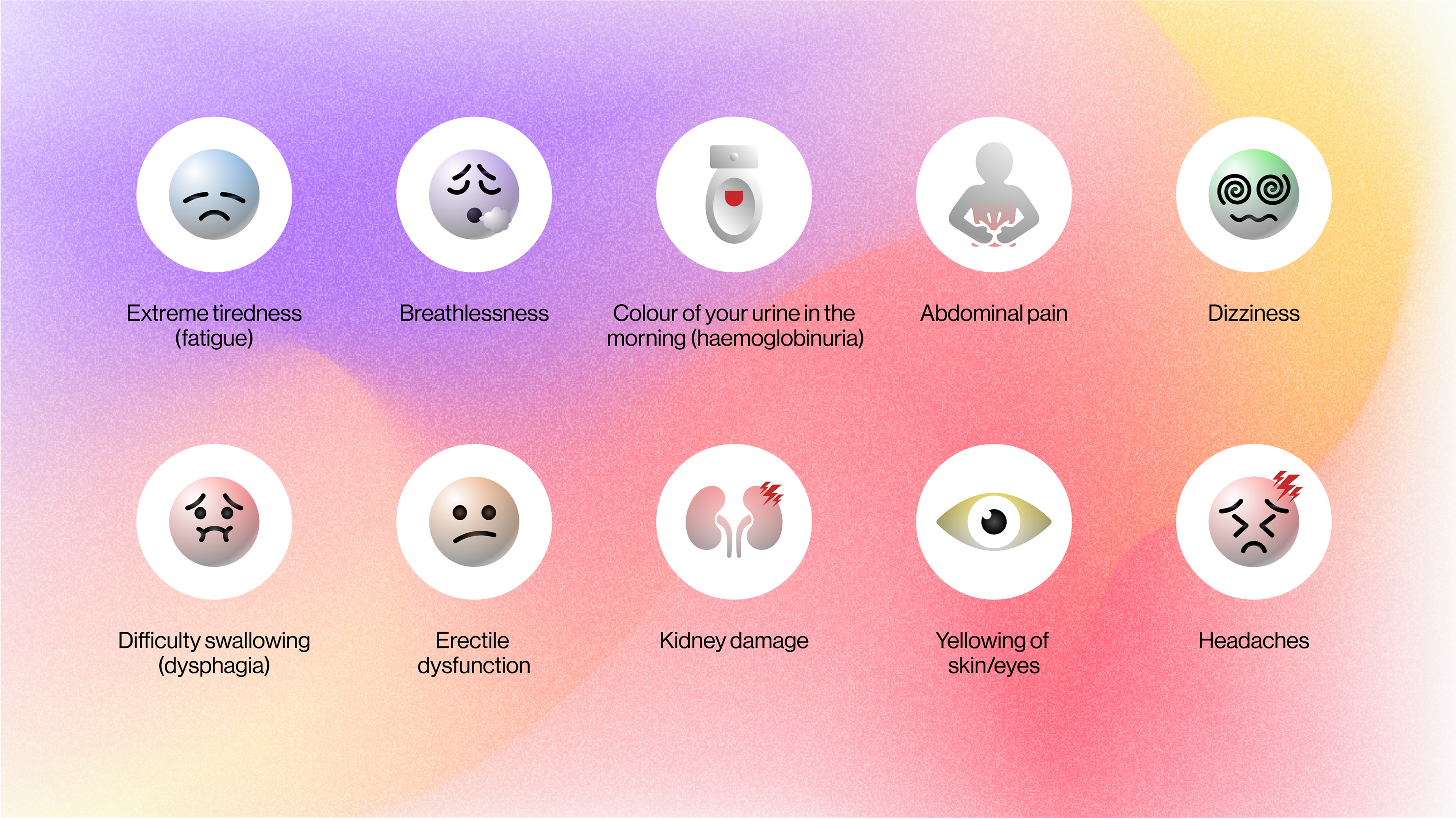
Some of the most common symptoms of PNH include:7
The importance of tracking
Every symptom tells a story, which can empower your doctor to understand your PNH better.
Keeping your healthcare team up-to-date and fully aware of the symptoms you are experiencing can help them design the most effective care management plan for you, allowing them to support you as best they can.
Keeping a record of the symptoms you experience and the impact they have on your daily life can be a useful tool to support more informed and focussed discussions with your healthcare team, giving them a fuller picture of how your condition affects you.
PNH Symptom Tracker
Tracking your symptoms takes just a few minutes with the free online PNH Symptom Tracker (developed and funded by Novartis Pharmaceuticals UK Ltd).
The tracker includes:
- A dashboard that summarises your symptoms and how they are affecting you
- Regular reminders to support you in logging symptoms and other important information
- The option to view your information across different time periods, so you can see how your symptoms have changed
Click to access it today
Managing PNH
Deciding on a treatment plan for PNH should be an individual process, and different options may be considered depending on the symptoms you are experiencing. That’s why it’s important to work closely with your healthcare team and take a shared approach to decision-making. This means talking through the available options, understanding the potential benefits and risks of each, and deciding together on a treatment plan that best fits your needs and goals.6
Treatments for PNH aim to address and manage specific symptoms that you may experience.3 These may include medicines called complement inhibitors, which target part of your immune system to reduce the breakdown of red blood cells.6
In some rare cases, a bone marrow transplant may be considered.3
Other supportive treatments for PNH are available, such as:3,6
Be sure to speak with your healthcare team if you have any questions about a specific treatment –
they can help you explore the options available to you. Understanding your symptoms also helps your doctors make informed decisions and recommend treatments that best suit your individual needs.
Useful sources of information
If you would like more information on PNH or sources of support, you may find following website helpful:
The National PNH Service
The National PNH Service is world-renowned for its expertise in managing people with PNH. The service provides education to both healthcare professionals and patients, as well as links to further resources, charities, and patient groups.

References:
- Schrezenmeier H, et al. Ann Hematol. 2020;99:1505–1514.
- Orpha.net (2024). Parmoxysmal nocturnal hemoglobinuria. Available at: https://www.orpha.net/en/disease/detail/447. Accessed October 2025.
- National Organization for Rare Disorders (2024). Paroxysmal nocturnal hemoglobinuria. Available at: https://rarediseases.org/rare-diseases/paroxysmal-nocturnal-hemoglobinu…. Accessed October 2025.
- Brodsky RA. Blood. 2014; 124(18):2804–2811.
- Kulasekararaj AG, et al. Blood Rev. 2023;59:101041.
- European Society for Blood and Marrow Transplantation (EMBT). Understanding PNH. Available at: https://www.ebmt.org/sites/default/files/migration_legacy_files/documen…. Accessed October 2025.
- PNH National Service. Signs and symptoms. Available at: https://pnhserviceuk.co.uk/patient-information/what-is-pnh/signs-and-sy…. Accessed October 2025.
UK | October 2025 | FA-11491388