-
 Education Awareness
Chronic Spontaneous Urticaria in Ireland: what interim patient survey findings reveal
For World Urticaria Day on 1 October, Novartis Ireland is sharing early findings from an ongoing survey of people living with Chronic Spontaneous Urticaria (CSU) in Ireland.
Chronic Spontaneous Urticaria (CSU), also known as chronic hives, is a long-term condition that causes recurring itching, hives and swelling without a known external trigger. CSU affects more than the skin: it can disrupt sleep, wellbeing, work, family life and social activities.
The 2026 World Urticaria Day theme, “Take Back Control – From Itch to Understanding”, calls for greater recognition of the lived experience of urticaria and the importance of listening to patients. Interim findings from an ongoing survey in Ireland provide an early picture of how CSU affects patients’ daily lives, work and use of healthcare services.
How does CSU affect work and healthcare services in Ireland?
CSU affects people’s ability to work: 41% of respondents have taken time off because of the condition. Among those affected, the average time missed is 16 working days per year, demonstrating the substantial impact of CSU on employment and productivity.
CSU also places a significant burden on healthcare services. More than half of respondents (54%) have attended an Emergency Department because of CSU, while 64% receive most of their care through the public hospital system. In addition, 31% of patients need specialist appointments two to three times each year, reflecting the condition’s ongoing healthcare burden.
On reviewing results, Dr Niall Conlon, Consultant Immunologist, St. James's Hospital and Trinity College Dublin, commented:
“These interim findings highlight that CSU is far more than an intermittent skin condition. The high levels of itching, fatigue and sleep disturbance reported by patients can have a profound effect on day-to-day functioning, wellbeing and productivity. It is particularly striking that over a third of respondents are not fully satisfied with their current treatment, reinforcing the need to continue improving care and outcomes for people living with CSU. We need to do better. I encourage people living with this significant disorder to take part in the survey so that we can build a clearer understanding of their experiences and unmet needs”
What is the biggest unmet need for people living with CSU?
Incomplete symptom control is the biggest unmet need for people living with Chronic Spontaneous Urticaria. Among respondents who are not satisfied with their treatment, almost half (47%) say it provides only partial relief, 40% report no meaningful symptom relief, and one-third say their treatment does not improve their quality of life.
How does Chronic Spontaneous Urticaria affect daily life?
CSU is much more than a skin condition. Based on 39 responses collected so far, the provisional results show that 74% of respondents say CSU has a significant or severe impact on their daily lives. The most commonly reported symptoms are itching and discomfort (82%), hives or wheals (79%), fatigue and exhaustion (67%), sleep problems (54%), and angioedema—swelling beneath the skin—(49%).
The interim Irish survey findings also show a substantial emotional and practical burden. Six in ten respondents (61%) report a major impact on their mental and emotional wellbeing. More than half (54%) report a major impact on work or education, family responsibilities, and social life. In addition, 38% avoid social activities and 31% say they struggle to maintain social contact.
How long does it take to receive a CSU diagnosis in Ireland?
For many survey participants, the journey to a confirmed CSU diagnosis is long. Respondents report an average of 39 months from first symptoms to diagnosis and 19 months from first seeking medical help to receiving a confirmed diagnosis. Almost half (49%) say they were initially told they had an allergy, and respondents saw an average of four doctors before their diagnosis was confirmed.
Who can take part in the Irish chronic urticaria survey?
The Irish chronic urticaria survey remains open and adults aged 18 or over who have received a diagnosis of Chronic Spontaneous Urticaria (CSU) or Chronic Inducible Urticaria (CIndU) are invited to take part. The survey takes approximately 15 minutes, and results will be reported in anonymised, aggregated form.
Please click here to complete the survey
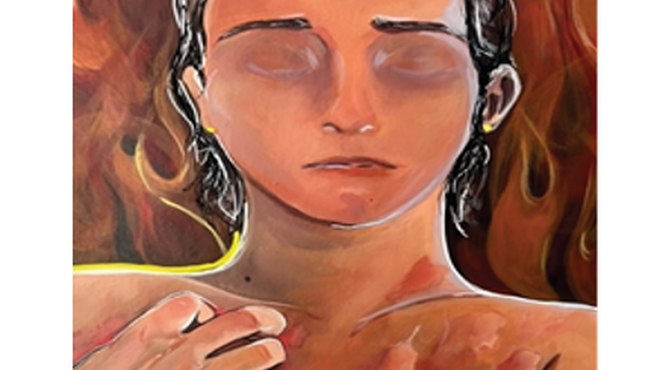
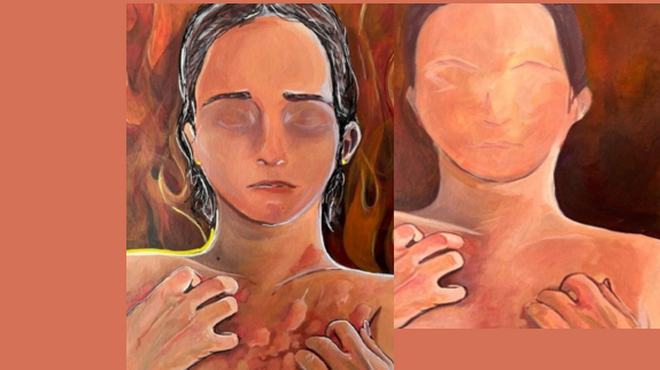
This data is based on interim data (39 respondents) collected from a CSU online patient survey conducted by Ipsos, which is supported by Novartis Ireland Ltd. Percentages are averages. A Shared Canvas: The Untold Stories of Urticaria is a depiction of CSU by artist Valentina Vittorio: Instagram this_is_velentina. IE 11803589. September 2026.
Education Awareness -
 Corporate
The Celtic Roots of the Novartis Campus
History of Novartis
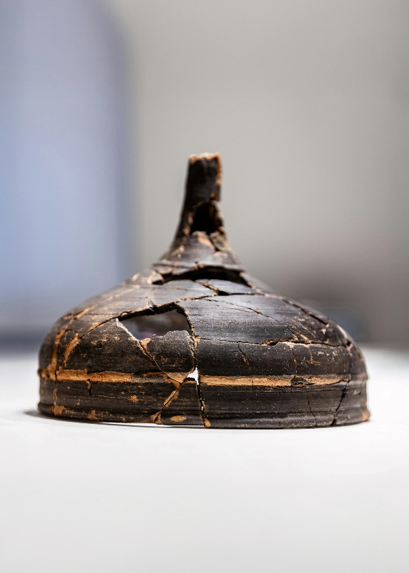
Celtic roots.More than 2,000 years before the Novartis Campus became a centre of scientific discovery, this site in Basel was home to a thriving Celtic settlement.
Archaeological finds from the Basel-Gasfabrik area reveal a community shaped by trade, craftsmanship and exchange — a reminder that curiosity, connection and transformation have long been part of this place’s story.
For audiences in Ireland, that Celtic thread carries a familiar resonance: Celtic languages, art, storytelling and social traditions have also helped shape Irish identity over many centuries.
From Basel to Ireland, these shared echoes of Celtic heritage offer a powerful reminder of how cultures, ideas and communities have always travelled, adapted and evolved. As the Novartis Campus developed, the company worked closely with Basel-Stadt’s cantonal archaeological research team, helping enable extensive excavation and documentation of the site. That cooperation supported the recovery of more than a million artefacts, preserving an extraordinary record of this early Celtic community for future study. Today, selected finds from the Basel-Gasfabrik settlement can be explored through Basel-Stadt’s archaeological collections and exhibitions, where they continue to bring this remarkable chapter of the site’s history to life.
Corporate -
 Corporate
The Novartis Story

Jul 17, 2026
Thirty years ago today, the merger of Ciba-Geigy and Sandoz brought together two of Switzerland’s most storied companies and created something new: Novartis.
Approved by the European Commission on July 17, 1996, it was among the largest corporate mergers of its time. More importantly, it united companies whose histories stretched back more than 250 years and whose generations of scientists and innovators saw possibilities where others did not.
The result was a company that redefined what medicine could achieve—and continues to do so today.
“Novartis was built by people who were willing to do things nobody had done before. In fact, many of the biggest advances in medicine began with questions no one knew how to answer. The same courage and curiosity that drove over 250 years of innovation around the world continues today and into the future for patients”.
Vas Narasimhan, Chief Executive Officer of Novartis
From dyes to discoveries
The story began long before 1996.
In the nineteenth century, Basel’s chemical and dye industries became a proving ground for discoveries in chemistry and biology that would eventually help shape modern medicine.
Novartis predecessor companies carried those discoveries into healthcare, expanding from dyes and chemicals into pharmaceuticals as new scientific opportunities emerged.
When those companies came together to form Novartis—a name inspired by the Latin novae artes, or “new arts, new skills”—they brought with them generations of expertise and a determination to push beyond what was possible.
Over the next three decades, that mindset helped turn ideas once considered out of reach into realities for patients.
Along the way, Novartis pioneered one of the first targeted therapies in cancer, brought the first approved cell therapy to patients around the world, advanced efforts to combat malaria, and helped bring gene therapy from a scientific promise to a reality for families affected by a rare genetic disorder.
These advances helped change expectations for diseases that had long been difficult to treat and opened new paths for patients, health care professionals, and researchers.
None of those advances were obvious at the start. Each began with the willingness to go first or a belief that science could go further. People saw possibilities where others saw obstacles and pursued them anyway.
Today, that same spirit continues to guide Novartis.
The company is tackling some of the most challenging diseases, while continuing to advance newer approaches to medicine like radioligand therapy (RLT), gene and cell therapy, and xRNA, so more patients can benefit.
With RLT, for example, Novartis helped transform this breakthrough from a promising concept into a commercially available therapy and continues to advance its potential today, with ongoing efforts to reach more patients and explore its use in more cancers.
Pursuing what’s possible
Discovery only matters if it makes a difference in patients’ lives.
Novartis has helped expand the reach of innovative medicines, advance disease awareness, and support earlier diagnosis and treatment by coming together with like-minded partners—whose experiences help define what matters most.
“Lasting progress is built over time through a shared purpose and a willingness to tackle challenges together,” said Pat Garcia-Gonzalez, co-founder and CEO of The Max Foundation, a global health nonprofit that has partnered with Novartis since 2001 to broaden the reach of cancer medicines. “As Novartis marks 30 years, we are proud to continue working alongside them and others to help expand care, strengthen health systems, and improve the lives of people around the world. And we look forward to even broader collaboration and deeper impact in the years ahead.”
Thirty years after its founding, Novartis continues to explore some of medicine’s toughest unanswered questions, building on generations of scientific curiosity and discovery while looking toward what patients may need next.
The tools may have changed. The science has advanced. And researchers can now explore possibilities that previous generations could scarcely imagine.
Yet the challenge remains familiar: finding new ways to tackle the hardest-to-treat diseases society is facing.
More than 250 years later, the work of reimagining what’s possible continues.
Corporate -
 Corporate
CIPD Ireland HR Awards – Finalist Recognition
Novartis Ireland is proud to have been recognised as a finalist in the 2026 CIPD Ireland HR Awards for our Maternity Returners Programme, shortlisted in the People & Culture Initiative category.
The nomination acknowledged the work of our People & Organisation (P&O) team in developing a supportive, human‑centred experience for employees returning from maternity leave. The programme was co‑created with returners, managers and P&O partners, and provides a structured approach that strengthens confidence, connection and career continuity. Key elements include a Maternity Returners Toolkit, flexible return pathways, a peer buddy programme, workshops, a returners community, and access to dedicated maternity coaching.
Launched in Dublin in 2025 and now embedded across Novartis Ireland, the initiative was designed in response to clear feedback from employees about the challenges of returning to work after maternity leave - including confidence loss, disconnection from the business, and uncertainty for managers supporting returners.
Corporate -
 Corporate
Novartis Ireland Eurovision Patient Choir Contest wins at the Irish Medical Times Irish Healthcare Awards 2025
We were delighted the Novartis Ireland Eurovision Patient Choir Contest won at the Irish Medical Times Irish Healthcare Awards 2025
Thank you to all the fantastic choirs who took part—it’s wonderful to see community and patient choirs being recognised.
Thank you to Cork Headway Choir, Forget Me Nots, Mercer's Melodies, Purple House Cancer Support, Relay for Life Choir, Rhythm of Recovery, Sea of Change, Sing for Life, Sing Strong and Sligo Cancer Support choir 🎶
Corporate -
 Corporate
Cancer Care at Work
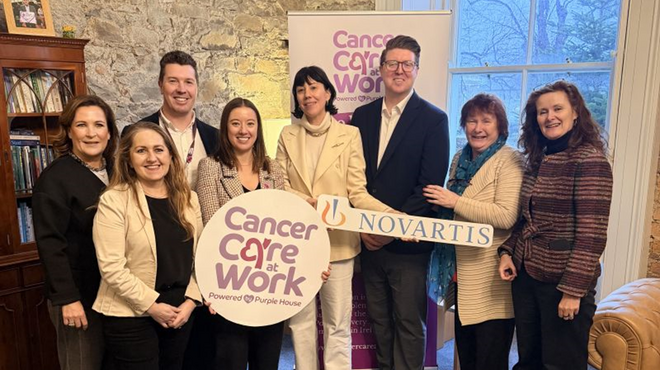
At Novartis Ireland, we believe nobody should have to face cancer at work alone. That’s why we’re proud to be sponsoring the Cancer Care at Work programme with Purple House Cancer Support - equipping managers with practical tools to support colleagues through disclosure, treatment, and return‑to‑work planning.
The programme provides evidence‑based training and ready‑to‑use resources so teams can respond with empathy and confidence.
We’re grateful to Purple House Cancer Support for their expertise and partnership as we continue building a workplace where people can stay, return and thrive.
Find out more: www.cancercareatwork.com | www.purplehouse.ieNovartis Ireland stories section
Novartis Ireland Eurovision Patient Choir Contest wins at the Irish Medical Times Irish Healthcare Awards 2025
Corporate -
 Corporate
The Novartis Commitment to Patients and Caregivers
On 14th February 2026, Novartis celebrated the eighth anniversary of the Novartis Commitment to Patients and Caregivers – a milestone that reflects our promise to place patients at the center of every decision we make.
This Commitment was co-created with the patient community in 2018 to further ensure we partner with patients and caregivers to embed their lived experiences throughout the development of medicines. From early research, through to trials and post-launch, patient partner organisations have helped us make decisions that are informed by, and relevant to patients and caregivers.
Our Commitment is continuous, and we are always working to strengthen our patient partnerships, and while much remains to be done, we wanted to invite you to read about the meaningful progress made in 2025 summarized in our factsheet below. This details the progress made in four key areas, defined and achieved together with patient organizations, known as the pillars of Commitment: Respecting and understanding the patient community, conducting responsible clinical trials, expanding access to our medicines, and recognizing the importance of transparency and reporting.
Our partnership with patient organisation is instrumental in reimaging medicines together as it allows us to immerse robust patient experience data within our work to design better trials, accelerate development and access, and ensure innovations address real-world needs.
Thank you for to all the patient organisation in Ireland for your invaluable collaboration and support
We remain fully committed to listening and learning from you as we continue to evolve together, and we look forward to our continued partnership.
Corporate -
 Corporate
Supercharged Ireland | Business Powered By AI
Corporate -
 Corporate
Early diagnosis can make the difference
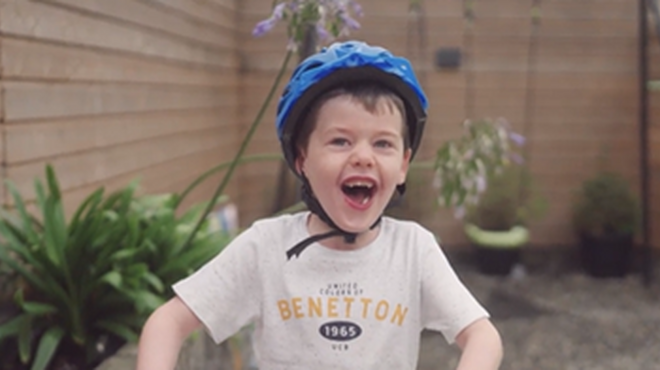
Early diagnosis can make the difference. That’s the message which was at the heart of our support for the Irish Pharmaceutical Healthcare Association (IPHA) Innovate For Life 2025 campaign, which this year focuses on early diagnosis and prevention. As part of this advocacy campaign, we were
’reshining a spotlight on newborn screening – and two family stories in particular – to highlight the importance of adding Spinal Muscular Atrophy (SMA) in newborn screening, (ie the heel prick test).We were very pleased that the Minister for Health has announced that, from 13 April 2026, testing for Spinal Muscular Atrophy (SMA) has now commenced through the National Newborn Bloodspot Screening Programme (heel prick test).
Corporate -
 Corporate
Share your experience of living with Chronic Spontaneous Urticaria (CSU)
Corporate -
 Corporate
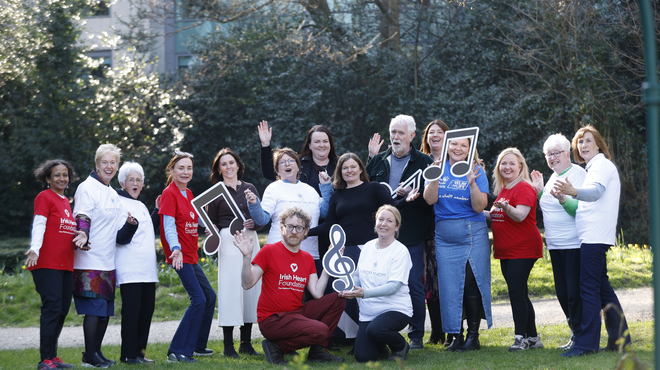
Congratulations to all the choirs who took part in the Novartis Ireland Patient Choir Contest!
Corporate -
 Corporate
Novartis Ireland launches Patient Choir Contest To Celebrate Eurovision 2025 Sponsorship
Corporate