Size Matters in Prostate Cancer
Experts share role of theranostics as a new era in prostate cancer diagnosis and therapy - helping improve survival and quality of life, even in advanced cases
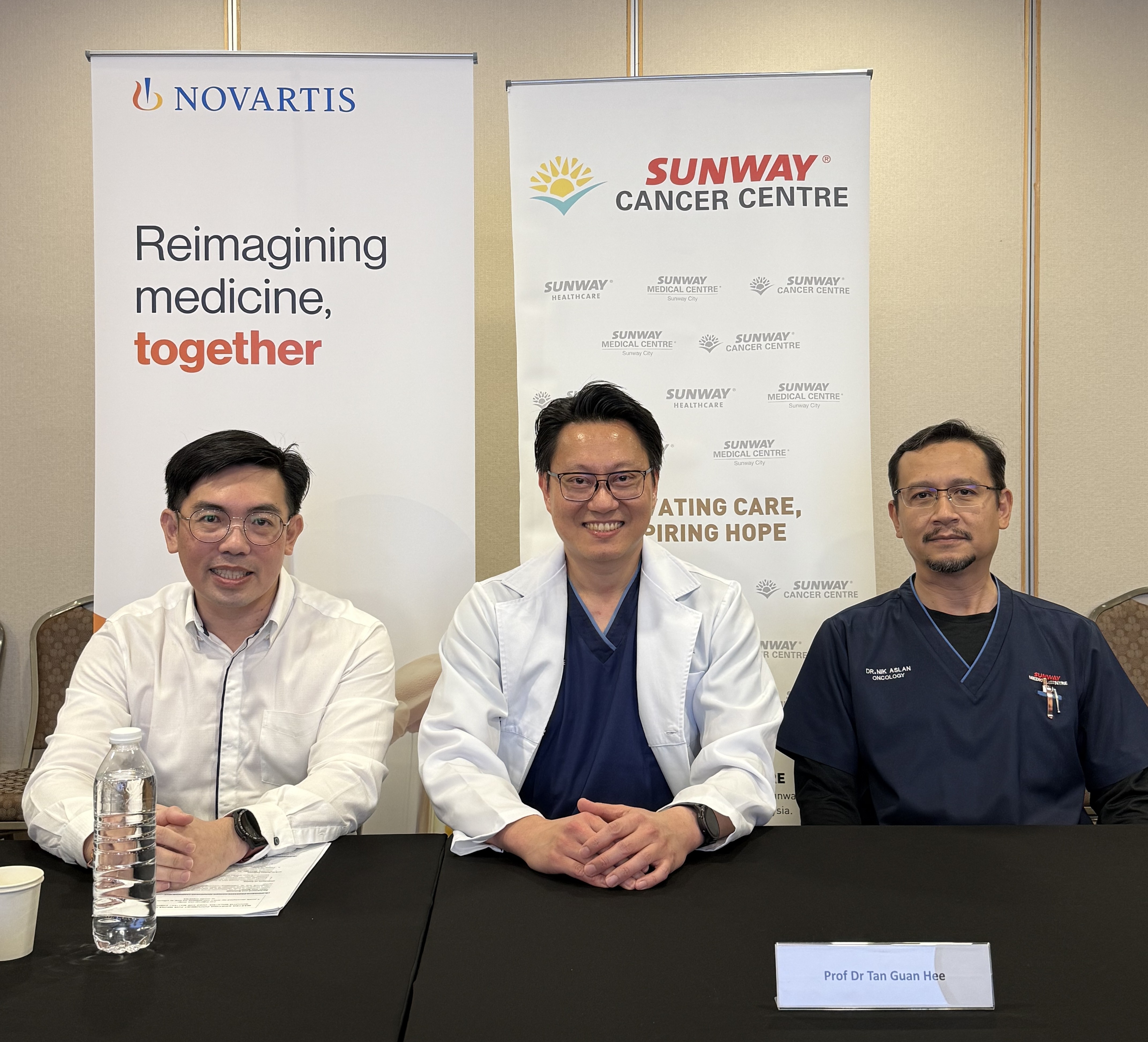
Petaling Jaya, 9 July 2025 – Size matters - especially when it comes to prostate cancer. For men, an enlarged prostate can be one of the earliest signs that something is amiss. However, an enlarged prostate and other symptoms such as difficulty urinating are often dismissed as normal signs of aging. Ignoring these signs can lead to serious consequences.
The Burden of Advanced Prostate Cancer
In Malaysia, prostate cancer is the third most common cancer among men. Incidence rates rise steeply after 65, from 31.3 per 100,000 men aged 60-64 to 70.6 per 100,000 men aged 65-69. It continues to increase exponentially with age – placing more men at risk as the nation’s population grows older. Yet, close to three-quarters of cases are diagnosed in advanced stages, where complications are more severe, treatment options more limited, and survival rates significantly reduced.[1] [2] [3]
“Prostate cancer is insidious, often silent, and frequently ignored until it’s too late,” said Professor Dr Tan Guan Hee, Consultant in Urology and Urologic Oncology, at a media roundtable session organised by Sunway Medical Centre, Sunway City in collaboration with Novartis Malaysia. “Yes, size usually matters. When the prostate is enlarged or urinary symptoms appear, that should trigger a check, not a shrug. The assumption that it’s ‘just aging’ can delay diagnosis and lead to poorer outcomes.”
Prof Tan Guan Hee elaborated that the five-year relative survival rate for stage 4 prostate cancer is only 43.2%, according to the Malaysian Study on Cancer Survival[4] [5] - a stark reminder of the price of late diagnosis.
Bridging the Gaps in Prostate Cancer Care
Critical gaps remain in how Malaysian men approach prostate health, including:
Delayed symptom recognition: Urinary changes or an enlarged prostate are often ignored instead of investigated;
Late-stage diagnosis: Many cases are only detected when the disease is advanced, potentially due to the limitations of conventional imaging methods, which can miss small or early metastases;
Limited awareness of advanced diagnostic and treatment options.
Addressing these gaps is key, say experts, particularly as Malaysia’s population continues to age.
“When patients are diagnosed early, their chances of survival and quality of life are significantly improved. The challenge is ensuring men get to us before the disease becomes aggressive and spreads to the bone. PSA tests alone can’t detect this. They only measure the level of prostate-specific antigen in the blood, but does not reveal where it has spread,” said Dr Nik Muhd Aslan bin Abdullah, Consultant Clinical Oncologist, Sunway Medical Centre, Sunway City. “That’s where greater awareness and theranostics, an innovative combination of therapy and diagnostics, can make a difference.”
He added that targeted therapy could shift outcomes significantly: “With advanced tools like precise imaging and staging, we’re now able to personalise treatment based on a patient’s unique disease profile. This means more effective results, even for those with advanced prostate cancer.”
Theranostics: Personalised Diagnosis and Therapy in One
A promising innovation in this space is theranostics - a dual approach that combines targeted imaging with targeted therapy. One of the most advanced forms of theranostics in prostate cancer today involves PSMA (Prostate-Specific Membrane Antigen) imaging and Radioligand Therapy (RLT).
“PSMA is a biomarker found on prostate cancer cells - over 80% of men with advanced disease have high PSMA expression[6],” explained Associate Professor Dr Tan Teik Hin, Consultant Nuclear Medicine Physician, Sunway Medical Centre, Sunway City. “PSMA imaging is a scan that lights up areas with high PSMA levels that can detect tumours as small as 0.3cm and determine how far the cancer has spread.[7] [8] Its greater accuracy allows us to be incredibly precise in tracking and mapping out the disease.”
Once visualised, RLT can then be used to deliver radioactive particles directly to the cancer cells. This targeted approach helps to spare healthy tissue, and reduces potential systemic side effects. This gives RLT a favourable safety profile that is also well tolerated. This is a significant advancement for patients with metastatic castration-resistant prostate cancer (mCRPC), who may have already exhausted conventional therapies.[9] [10][11]
“We often say: if we can see it, we can treat it. That’s exactly what theranostics offers,” added Assoc Prof Dr Tan Teik Hin.
Looking Ahead: From Awareness to Action
With Malaysia facing increasing incidence of prostate cancer, there’s an urgent need to shift the narrative from reactive to proactive care - starting with breaking the stigma around men’s health conversations.
“Prostate cancer doesn’t have to be a death sentence. Advances like PSMA imaging and RLT are giving patients new hope, especially when used early and strategically,” said Mr Mohamed Elwakil, Country President, Novartis Malaysia. “We’re committed to working with healthcare partners to bring these innovations to more patients, and to support awareness efforts that help men take charge of their health. Ultimately, our aim is to discover new ways to improve and extend patients’ lives.”
The use of theranostics, along with greater awareness and screening efforts, could help to reverse current trends by detecting what conventional methods might miss and helping to improve quality and duration of life after treatment, including those with advanced or metastatic cancer.[12] [13] [14]
Your Prostate, Your Call
An enlarged prostate is not just an inconvenience; it can be a warning sign. If you’re experiencing urinary symptoms, speak to your doctor about screening. If you’ve been diagnosed with advanced prostate cancer, ask if PSMA imaging and RLT are right for you or learn more on the ICanCare app.
This educational initiative is supported by Sunway Medical Centre, Sunway City in collaboration with Novartis Malaysia.
***
About Sunway Medical Centre, Sunway City
Sunway Medical Centre is the largest private quaternary hospital in Malaysia with 810 licensed beds and is committed to becoming an international healthcare institution of choice. The hospital offers a comprehensive range of medical services, which include state-of-the-art facilities and advanced medical technologies for outpatient and inpatient speciality care, health and wellness programmes and 24-hour emergency services, which include the dedicated Children’s Emergency, the first private hospital to offer this service. These are supported by a strong system comprising more than 3,800 dedicated healthcare and hospitality professionals.
Recognising the increasingly sophisticated needs in healthcare, SMC has developed niche areas of medical service, from the field of neurosciences to advanced cancer treatment, and from clinical research to bio-medical technology. Some of the core specialty areas include Oncology, Women and Children, Neuroscience, Heart and Lung, Bone and Joint, Robotic Surgery & MIS, and Digestive Health services. Its areas of expertise also include kidney transplant, bone marrow transplant, cochlear implant, and cornea transplant, as well as cell-based and gene-based therapies.
Sunway Medical Centre, the flagship hospital of Sunway Healthcare Group (SHG), is well recognised for an accolade of achievements. The hospital is accredited by the Joint Commission International (JCI) from the United States of America, the Australian Council on Healthcare Standards (ACHS), and the Malaysian Society for Quality in Health (MSQH). The hospital has been acknowledged as the top 250 hospitals globally in the esteemed Newsweek’s World's Best Hospitals 2024 and 2025 rankings, honoured in the inaugural Newsweek’s Asia’s Top Private Hospitals 2025 ranking, won Frost & Sullivan’s Malaysia Smart Hospital Company of the Year for two years in a row in 2021 and 2022, and won Frost & Sullivan’s 2024 Best Practices Market Leadership Award in the Malaysian hospital industry. SHG has been awarded the prestigious Company of the Year (Healthcare) for Community Care and Sustainability at the prestigious 2024 Sustainability & CSR Malaysia Awards, underscoring its ongoing commitment to healthcare while promoting environmental and community welfare.
Sunway Medical Centre is poised to set new standards of service with an exciting growth to over 1,100 hospital beds from its current 810 beds.
About Novartis Malaysia
Novartis has a long heritage and legacy in Malaysia. Established in 1971, we are a leading multinational company employing close to 700 associates who work in the Novartis International division and Novartis Corporate Center, Kuala Lumpur. Through our over 50-year presence in Malaysia, Novartis Malaysia continues to deliver on its corporate purpose of reimagining medicine to improve and extend the lives of over 33 million Malaysians.
In 2022, Novartis Malaysia was recognized as Sponsor of the Year by Clinical Research Malaysia for initiating 24 new clinical trials. We also have a proven track record of expanding access to our innovative medicines in private or public via collaborations with the Ministry of Health. Through these collaborations, Novartis has succeeded in touching the lives of more than 1.7 million Malaysian patients.
Starting March 7, 2022, Novartis Malaysia’s office is located in the new cutting-edge building called Plaza Imazium in Damansara Utama, Petaling Jaya. Novartis Malaysia occupies 2 floors and was one of 20 offices in Malaysia to be LEED Gold certified and the first office to be WELL Silver certified.
References:
[1] Ministry of Health Malaysia. Summary of The Malaysia National Cancer Registry Report 2017-2021.
[2] Malay Mail, 6 September 2024. DOSM: Malaysia to become aged nation by 2040 with population over 60 set to surge
[5] Lim J, Malek R, Jr S, et al. Prostate cancer in multi-ethnic Asian men: Real-world experience in the Malaysia Prostate Cancer (M-CaP) Study. Cancer Med. 2021;10(22):8020-8028. doi:10.1002/cam4.4319
[6] Hupe MC, Philippi C, Roth D, et al. Expression of prostate-specific membrane antigen (PSMA) on biopsies is an independent risk stratifier of prostate cancer patients at time of initial diagnosis. Front Oncol. 2018;8:623. doi:10.3389/fonc.2018.00623
[8] Georgakopoulos A, Bamias A, Chatziioannou S. Current role of PSMA-PET imaging in the clinical management of prostate cancer. Therapeutic Advances in Medical Oncology. 2023;15. doi:10.1177/17588359231208960
[9] American Journal of Managed Care. Will the Coming Radiopharmaceutical Wave Reach More Patients With Cancer? April 2025, Volume31, Issue 04 (SP181-SP183).
[10] Novartis. (2024, February 9). Novartis Pluvicto™ shows clinically meaningful and highly statistically significant rPFS benefit in patients with PSMA-positive metastatic castration-resistant prostate cancer in the pre-taxane setting.
[11] Lim J, Malek R, Jr S, et al. Prostate cancer in multi-ethnic Asian men: Real-world experience in the Malaysia Prostate Cancer (M-CaP) Study. Cancer Med. 2021;10(22):8020-8028. doi:10.1002/cam4.4319
[12] Combes AD, Palma CA, Calopedos R, Wen L, Woo H, Fulham M, Leslie S. PSMA PET-CT in the Diagnosis and Staging of Prostate Cancer. Diagnostics. 2022; 12(11):2594. https://doi.org/10.3390/diagnostics12112594
[13] Lim J, Malek R, Jr S, et al. Prostate cancer in multi-ethnic Asian men: Real-world experience in the Malaysia Prostate Cancer (M-CaP) Study. Cancer Med. 2021;10(22):8020-8028. doi:10.1002/cam4.4319